Operative Dictations in Urologic Surgery
Armenakas NA, Fracchia JA, Golan R. Inguinal lymph node dissection. Chapter 20. Wiley, 2019
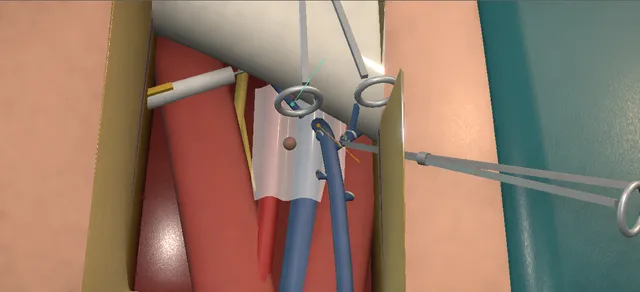
The indication (penile or scrotal wall cancer), the nine essential steps and their order, the template dictation followed here (positioning, the template from the anterior superior iliac spine to the pubic tubercle carried down the thigh, the incision below the ligament to Scarpa’s fascia, flaps below Camper’s fascia, the fascia lata incised over the sartorius and the adductor longus, the dissection from below, the saphenous vein preserved and its tributaries ligated, the femoral sheath opened at the fossa ovalis, the node of Cloquet and the deep nodes, no lateral dissection of the sheath, the packet en bloc, sartorius transposition, a drain through a separate stab, the flaps inspected, a two-layer closure and a pressure dressing), the variations (a superficial or modified dissection, the saphenous vein ligated in massive lymphadenopathy, fluorescein and a Wood’s lamp, a rectus abdominis myocutaneous flap) and the complication list. The chapter’s distances and suture materials are left off the page. The saves, the deep venous thrombosis line and the tributary line are general surgical practice; the chapter lists complications without their management. The scene is schematic: one groin, a neutral hip, the instruments at true size.
Open guideline
EAU-ASCO
EAU-ASCO Guidelines on Penile Cancer, update March 2026: sections 5.2.2, 5.2.3, 5.4 and 6.2, read 18 October 2026
Tumours T1b or higher are high risk; surgical staging is offered to all of them, by dynamic sentinel node biopsy, with ILND if it is not available or the patient prefers; sentinel node biopsy sensitivity 92 to 96%, false-negative 4 to 8%, complications 6 to 14%. The modified template: a shorter incision, no dissection lateral to the femoral artery or caudal to the fossa ovalis, the saphenous vein preserved; complications 35 to 49%, false-negative 15 to 20%. Palpable nodes are metastatic in 45 to 80%, to be confirmed by image-guided biopsy and staged with FDG PET-CT or CT. Daseler’s five zones round the saphenofemoral junction; the first nodes involved lie in the superomedial and then the central zones, with no solitary spread to the two inferior zones. cN1: fascia-sparing or open radical ILND sparing the saphenous vein if possible; cN2: open radical ILND sparing the saphenous vein if possible, or neoadjuvant chemotherapy. Radical ILND complications 21 to 55% in contemporary series. Prophylactic ipsilateral pelvic dissection for three or more involved inguinal nodes on one side or extranodal extension; nodal surgery complete within three months.
Open guideline
Journal of Urology
Bevan-Thomas R, Slaton JW, Pettaway CA. Contemporary morbidity from lymphadenectomy for penile squamous cell carcinoma: the M.D. Anderson Cancer Center experience. J Urol 2002;167:1638-1642
Abstract read 18 October 2026. 106 lymphadenectomy procedures in 53 patients: 66 prophylactic (superficial), 28 therapeutic, 12 palliative. 41 minor and 19 major complications; complications in 31 of 53 patients (58%). Skin edge necrosis 8% against 45 to 62% in three earlier series; leg oedema 23% against 50% in an earlier report from the same centre. Major complications included skin flap necrosis needing a graft and deep venous thrombosis; one death from sepsis after a palliative dissection.
Open guideline
European Urology
Stuiver MM, Djajadiningrat RS, Graafland NM, Vincent AD, Lucas C, Horenblas S. Early wound complications after inguinal lymphadenectomy in penile cancer: a historical cohort study and risk-factor analysis. Eur Urol 2013;64:486-492
Abstract read 18 October 2026. 237 ILNDs in 163 patients at the Netherlands Cancer Institute, 2003 to 2012. One complication or more in 58% of procedures; wound infection 43%, seroma 24%, skin-flap problems 16%. For grade 2 or worse complications, univariable odds ratios 1.66 for body mass index and 2.64 for sartorius muscle transposition; in the reduced multivariable model 2.12 for transposition (P = 0.06) and 1.76 for body mass index.
Open guideline