
Inguinal and pelvic nodal surgery for penile cancer
Staging and therapeutic nodal procedures from sentinel-node biopsy to radical inguinal and pelvic dissection, with open and minimally invasive variants.
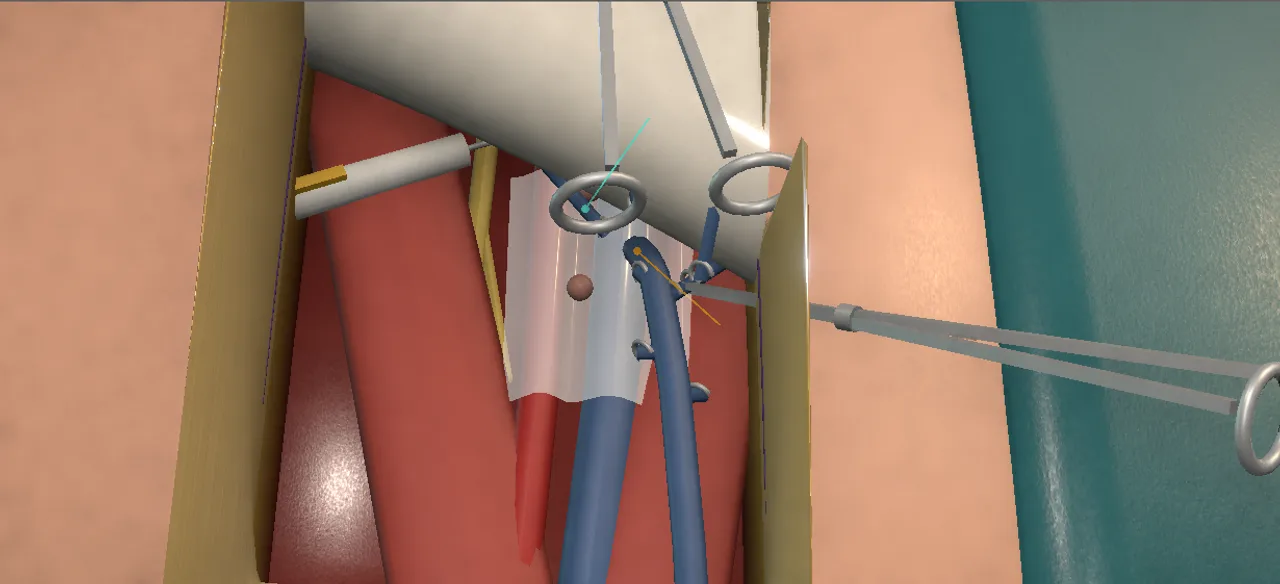 Interactive 3D Interactive inguinal lymph node dissection Open the 3D animation
Teaching catalogue only. This coverage record is not a patient pathway or operative instruction.
Typical place in practice
Risk-directed nodal staging or treatment of proven regional disease within a specialist penile-cancer multidisciplinary pathway.
Alternatives and neighbouring procedures
Ultrasound-guided biopsy, surveillance in appropriately low-risk disease, systemic treatment or radiotherapy according to nodal context.
Same procedure family, explicit technique branches
These are variations of this canonical operation. Complication modules below identify whether they apply to all branches or only to named approaches.
Dynamic sentinel-node biopsy
Stages clinically node-negative groins while limiting dissection morbidity.
Modified or radical open inguinal lymphadenectomy
Removes nodal basins with extent matched to staging and disease.
Video-endoscopic or robotic inguinal lymphadenectomy
Separates nodal clearance from the overlying skin flap in selected centres.
Pelvic lymph-node dissection
Extends regional treatment when pelvic nodal risk or involvement warrants it.
High-level sequence
Coverage outline only; not a step-by-step technical guide.
- Confirm bilateral nodal stage and procedure-specific mapping
- Plan skin, vascular and lymphatic preservation without compromising clearance
- Remove the indicated nodal template and label sides/levels accurately
- Protect femoral vessels, nerve and saphenous drainage where appropriate
- Manage drains and monitor wound, lymphatic, vascular and oncological outcomes
Operative notes
Concise operative notes covering the key steps, landmarks and watch points, in the order you encounter them.
Penile cancer surgery
What it does: remove penile tumour, keep function where safe.
partial penectomy
- Leave 3-4 cm minimum. He voids standing.
- Glove sewn over the tumour.
- Tourniquet at the base, penis emptied first.
- Mark the margin: a clear margin of a few mm is oncologically safe (EAU); the old 2 cm rule is historical.
- Skin cut. Dorsal bundle tied.
- Corpora cut, top to bottom.
- Cavernosal arteries tied, 3/0.
- Urethra cut 1 cm BEYOND the corporal cut. Spatulate it.
- Corpora closed with transverse 2/0.
- Skin closed upright. Full-thickness urethra to skin. Catheter 10 days.
total penectomy + perineal urethrostomy
- Circle cut at the base, plus 2 cm up and down.
- Suspensory ligament cut. Vessels clipped.
- Urethra freed at mid-shaft, right angle behind it.
- Corpora divided at the pubic rami. Oversewn.
- Urethra tunnelled under skin to a perineal hole.
- Spatulate. Stitch full thickness. Close sideways.
- 2026 update: Sentinel node biopsy in the groin is now standard in UK centres. Not routine full groin clearance.
- 2026 update: Laser, brachytherapy, glans resurfacing: penis-sparing options for low risk.
From the UroRef Operative Quick Guide. Open the note page →
Every failure mode is its own module.
Timing and variation coverage are recorded for each module.
Skin-flap necrosis or wound breakdown
Groin skin perfusion is vulnerable after open flap elevation.
Applies to: Modified or radical open inguinal lymphadenectomyLymphocele, lymphorrhoea or leg/genital lymphoedema
Extensive lymphatic division can cause persistent collections and long-term swelling.
Applies to: All variantsWound or deep infection
Groin moisture, lymph leakage and skin compromise increase infection risk.
Applies to: All variantsFemoral or iliac vascular injury and thrombosis
Nodal tissue can be adherent to major vessels, especially with bulky disease.
Applies to: All variantsNerve injury, numbness or chronic pain
Sensory branches and the femoral/obturator nerves are exposed during dissection.
Applies to: All variantsPort, gas-space or conversion complication
Minimally invasive groin access creates distinct subcutaneous-space and conversion risks.
Applies to: Video-endoscopic or robotic inguinal lymphadenectomyFalse-negative staging or incomplete nodal clearance
Mapping failure, missed basins or inadequate template can delay recognition of disease.
Applies to: All variants