
Revision sheet
Intravesical BCG
9 steps, each one the authored title and caption from the interactive animation, with the frame captured from that step. Read it before the case, or print it and work through the steps in order.
Teaching only, not for diagnosis or treatment decisions. The text on this sheet is the animation's own step copy, reproduced verbatim.
UrOops3D · UroRef · © Nity G
- 01
Who
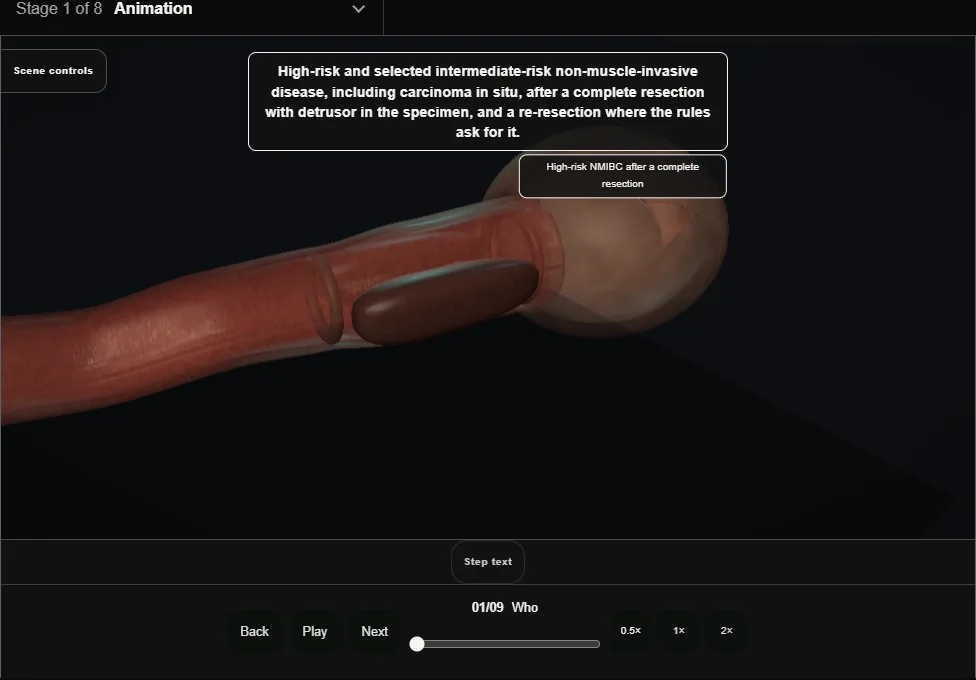
- High-risk and selected intermediate-risk non-muscle-invasive disease, including carcinoma in situ, after a complete resection with detrusor in the specimen, and a re-resection where the rules ask for it.
- Not for the immunosuppressed, active tuberculosis, pregnancy, or anyone with previous BCG sepsis.
- 02
Timing and the checks
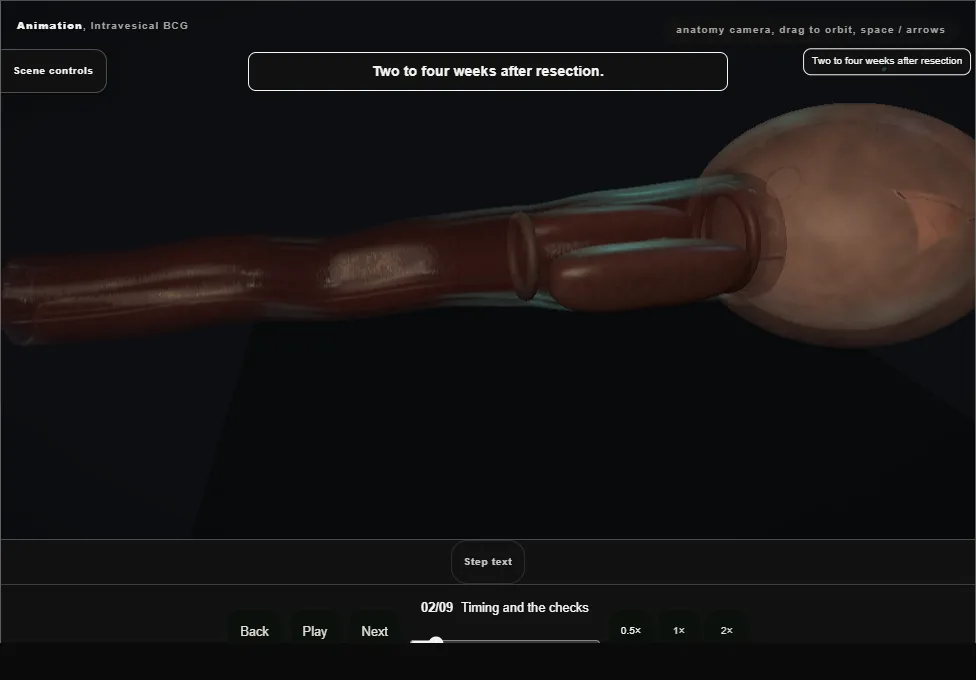
- Two to four weeks after resection.
- Each visit: no visible haematuria, no infection, a clear dipstick, no fever, symptoms from the last dose settled, and no unhealed mucosal injury after traumatic catheterisation.
- BCG into a raw bladder goes into the blood.
- 03
Preparation
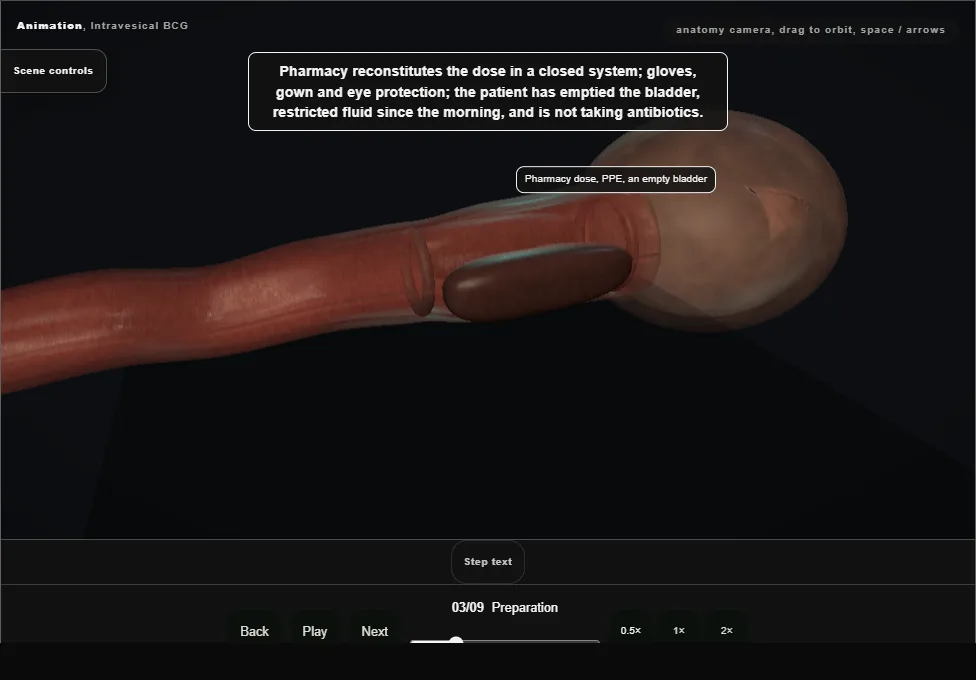
- Pharmacy reconstitutes the dose in a closed system; gloves, gown and eye protection; the patient has emptied the bladder, restricted fluid since the morning, and is not taking antibiotics.
- Live attenuated mycobacteria: the room is set up for a spill.
- 04
The catheter
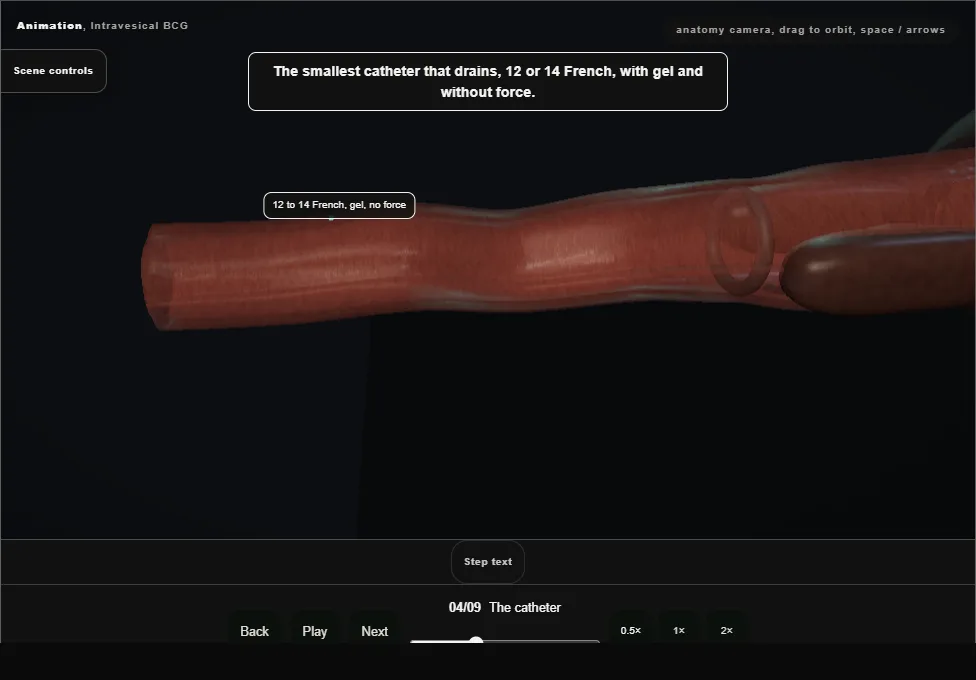
- The smallest catheter that drains, 12 or 14 French, with gel and without force.
- Blood on the catheter or in the urine means BCG is withheld until the bleeding has resolved and any mucosal damage has healed: a breach in the urothelium is the door to BCG sepsis.
- 05
Instillation
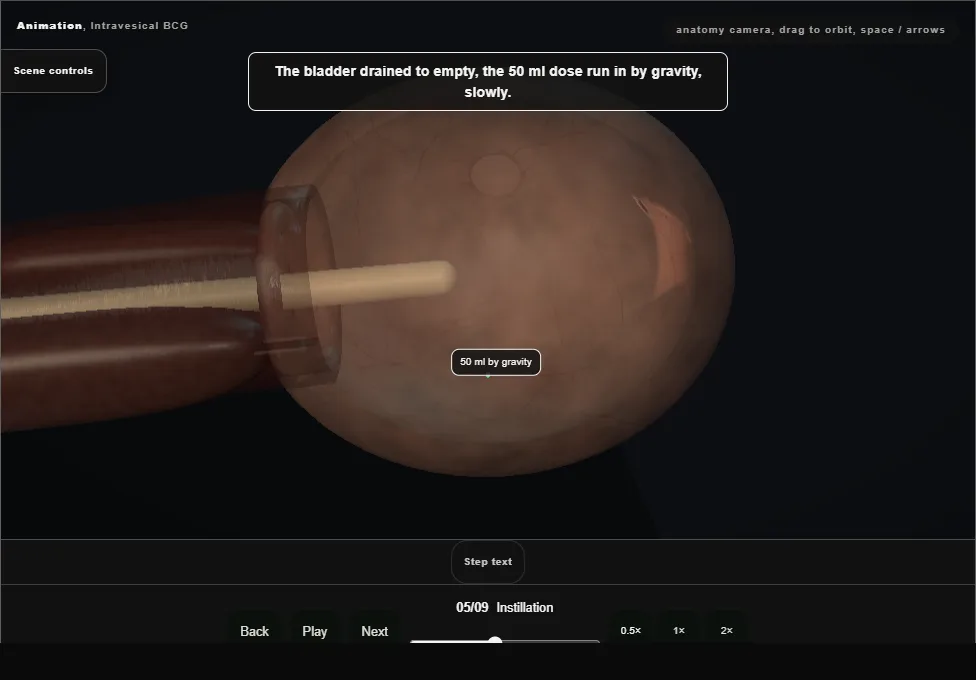
- The bladder drained to empty, the 50 ml dose run in by gravity, slowly.
- The catheter removed, or clamped if it must stay; nothing else goes in, and nothing is flushed through after.
- 06
Two hours, then void
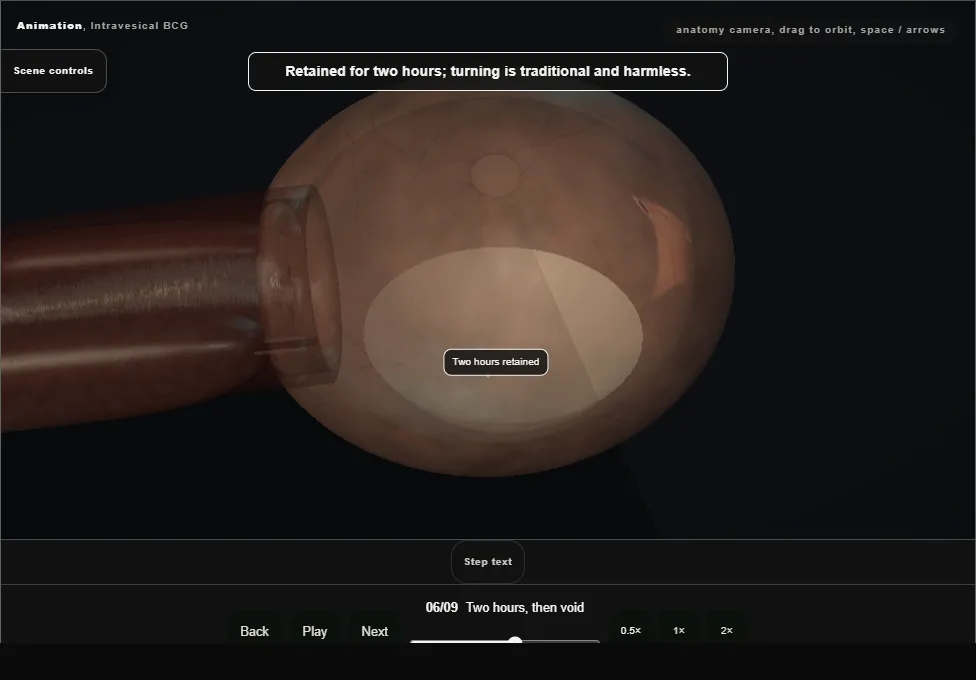
- Retained for two hours; turning is traditional and harmless.
- Voided sitting down, bleach in the toilet for fifteen minutes before flushing, hands and genitals washed, the same for six hours at home.
- Plenty of fluids afterwards; condoms for a week.
- 07
The schedule
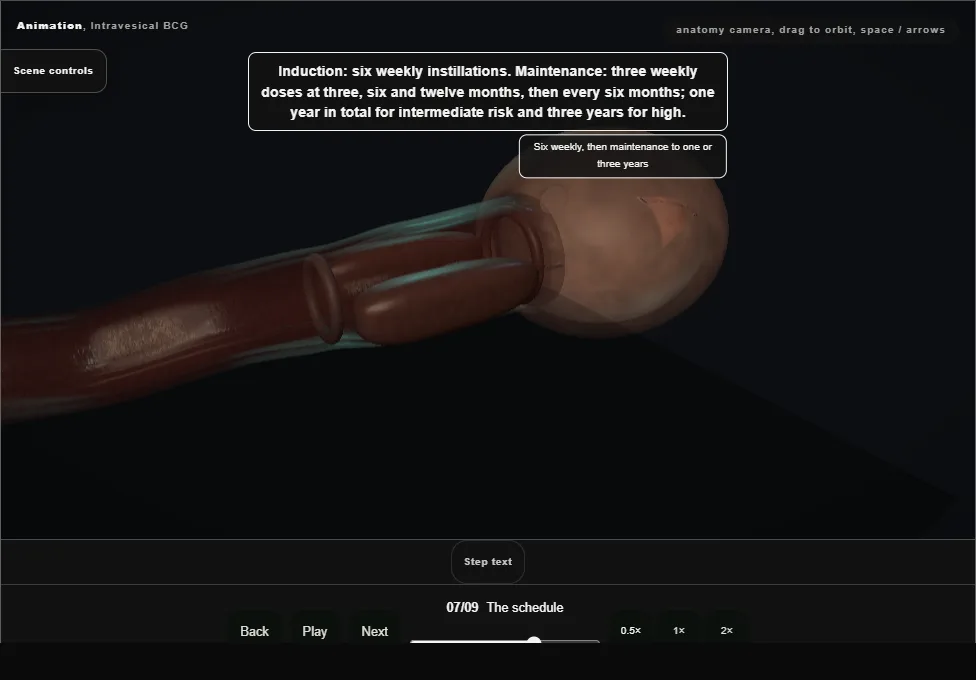
- Induction: six weekly instillations.
- Maintenance: three weekly doses at three, six and twelve months, then every six months; one year in total for intermediate risk and three years for high.
- A dose is missed for unsettled cystitis, fever or antibiotics; never doubled later.
- 08
Toxicity
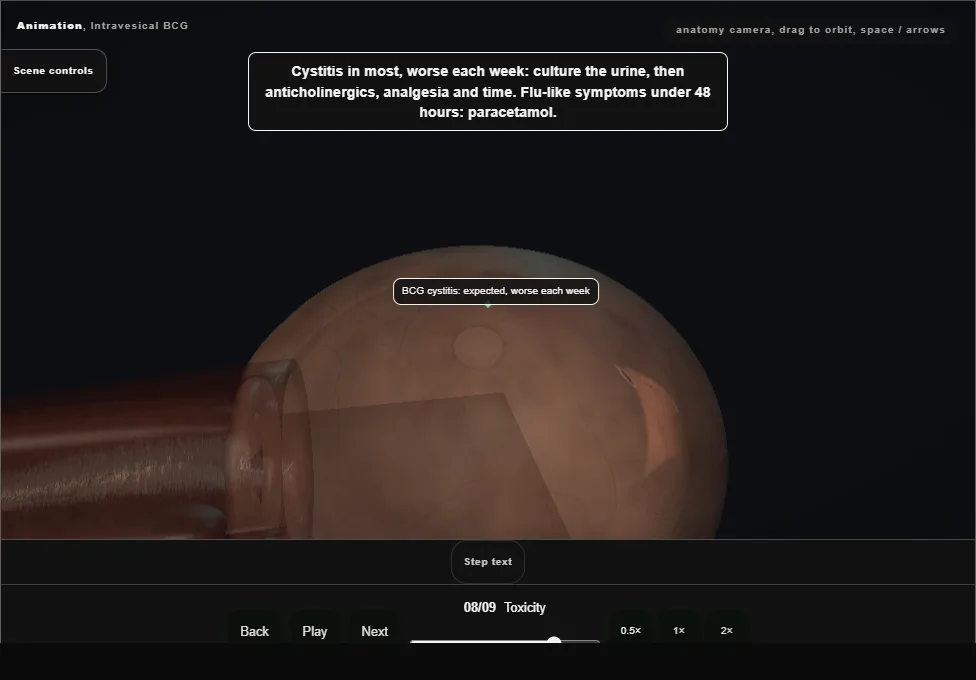
- Cystitis in most, worse each week: culture the urine, then anticholinergics, analgesia and time.
- Flu-like symptoms under 48 hours: paracetamol.
- The rule: fever over 38.5, any fever beyond 48 hours, rigors or a very ill patient is BCG sepsis until proved otherwise: admit, blood cultures, stop BCG for good, and start anti-tuberculous treatment with microbiology.
- Prostatitis, epididymo-orchitis and reactive arthritis can appear weeks later.
- 09
Response and failure
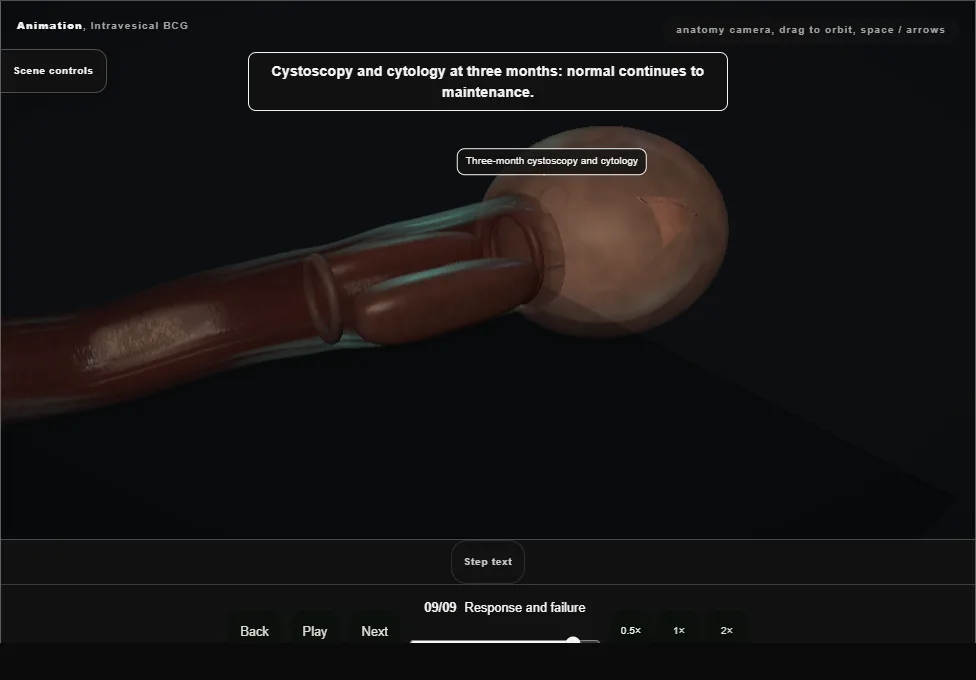
- Cystoscopy and cytology at three months: normal continues to maintenance.
- T1 high grade at three months, or high-grade Ta or carcinoma in situ persisting at six months after a second course, is BCG-unresponsive; so is high-grade recurrence within six months of the last dose.
- Adequate means at least five of six induction doses plus two more.
- Cystectomy is the standard answer, not more BCG; trials or bladder-sparing options if unfit or unwilling.
Derived from endoscopy/IntravesicalBcgScene.tsx at build time: every step title and caption above is the authored
ProcedureDef text, reproduced verbatim, and this page shares its readable-points renderer with the animation
itself. 9 of 9 steps have a captured frame.
Text fingerprint e5a6558330ff13e5. A caption edit without a re-capture fails the production
check, so the sheet and the animation cannot drift apart silently.