
Intravesical BCG therapy
Risk-adapted bladder instillation of live attenuated BCG through a catheter, delivered as an authorised induction and, where appropriate, maintenance programme.
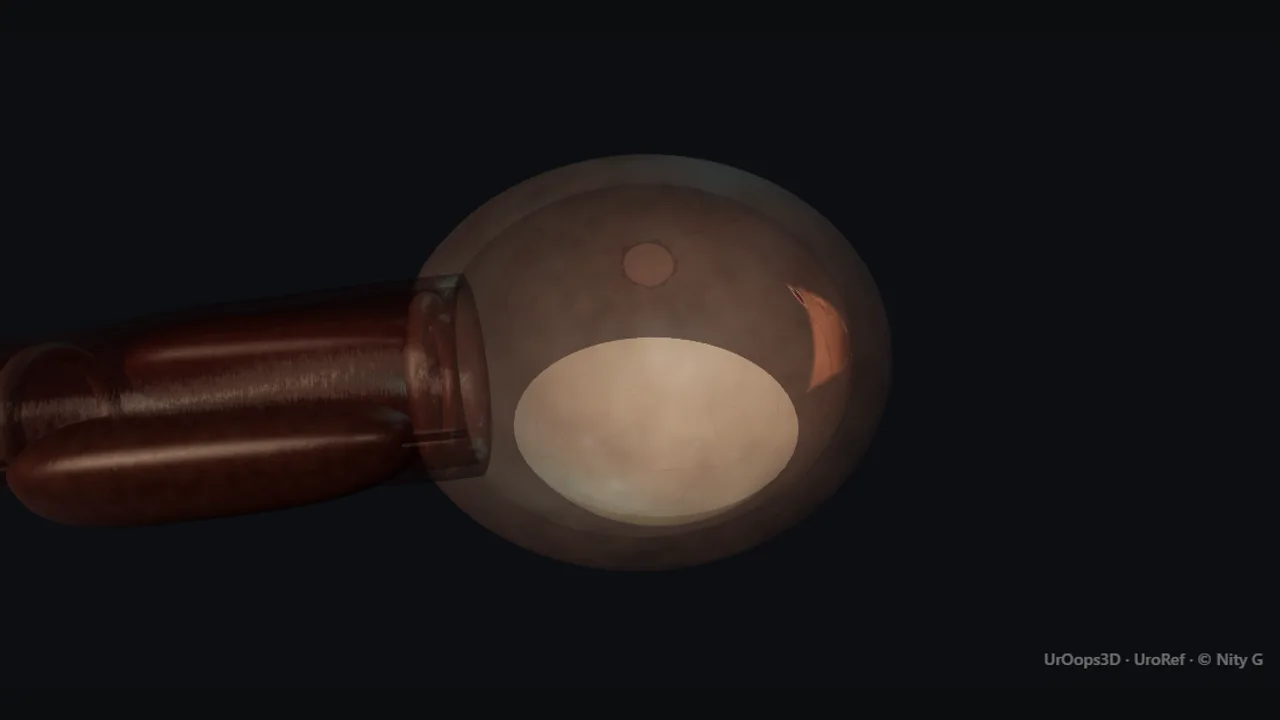 Interactive 3D Interactive BCG instillation model Open the 3D animation
Teaching catalogue only. This coverage record is not a patient pathway or operative instruction.
Typical place in practice
Adjuvant treatment of selected intermediate- and high-risk non-muscle-invasive bladder cancer after adequate endoscopic staging.
Alternatives and neighbouring procedures
Other intravesical agents, surveillance, repeat resection or definitive bladder treatment according to risk, response and suitability.
Same procedure family, explicit technique branches
These are variations of this canonical operation. Complication modules below identify whether they apply to all branches or only to named approaches.
BCG induction course
An initial protocol-defined series establishes the intravesical immune treatment pathway.
BCG maintenance course
Further instillations are delivered over time according to risk, tolerance and supply-aware protocol.
Risk-adapted modified BCG pathway
Timing or intensity is altered only within an authorised clinical pathway for toxicity, shortage or patient factors.
High-level sequence
Coverage outline only; not a step-by-step technical guide.
- Confirm indication, prior resection quality and current eligibility
- Screen for infection, traumatic catheterisation, bleeding and systemic contraindications
- Catheterise atraumatically and verify the authorised product pathway
- Instil and retain within the local protocol
- Provide exposure precautions and track toxicity, response and the next decision point
Every failure mode is its own module.
Timing and variation coverage are recorded for each module.
BCG cystitis and severe lower-tract symptoms
Immune-mediated bladder inflammation can cause dysuria, frequency, urgency, haematuria and pain that may limit treatment.
Applies to: BCG induction course · BCG maintenance course · Risk-adapted modified BCG pathwaySystemic BCG infection or inflammatory syndrome
Live organisms or an intense systemic response can cause persistent fever, organ involvement and critical illness, sometimes after a delay.
Applies to: BCG induction course · BCG maintenance course · Risk-adapted modified BCG pathwayTraumatic catheterisation with systemic exposure
Urethral or bladder trauma can permit BCG access to the bloodstream and is a key procedural safety concern.
Applies to: BCG induction course · BCG maintenance course · Risk-adapted modified BCG pathwayUrinary bacterial infection
Catheterisation and overlapping urinary symptoms can create or mask a conventional urinary infection.
Applies to: BCG induction course · BCG maintenance course · Risk-adapted modified BCG pathwayGranulomatous prostatitis, epididymo-orchitis or upper-tract involvement
Local or ascending BCG-related disease may present in genital, prostatic or upper urinary tract sites.
Applies to: BCG induction course · BCG maintenance course · Risk-adapted modified BCG pathwayBladder contracture or reduced capacity
Severe or repeated inflammation can cause fibrosis and a persistently small, painful bladder.
Applies to: BCG induction course · BCG maintenance course · Risk-adapted modified BCG pathwayTreatment interruption or incomplete oncological course
Toxicity, access or pathway deviations may prevent intended treatment and require a revised cancer-control strategy.
Applies to: BCG induction course · BCG maintenance course · Risk-adapted modified BCG pathwayOccupational or household exposure
Spillage or failure to follow live-agent handling and voiding precautions can expose others.
Applies to: BCG induction course · BCG maintenance course · Risk-adapted modified BCG pathwaySources for this module
TURBT quality, repeat resection and intravesical-treatment pathways.
Accessed 2026-08-03 · opens source European Association of Urology EAU Guidelines on Urological InfectionsInfection prevention, recognition and procedure-associated infection context.
Accessed 2026-08-03 · opens source British Association of Urological Surgeons Patient information leaflets by procedureUK patient-facing procedure, alternatives, recovery and complication framing.
Accessed 2026-08-03 · opens source