Live attenuated mycobacteria instilled into the bladder through a catheter, once a week for six weeks and then for one to three years, to keep high-risk non-muscle-invasive bladder cancer from coming back and from progressing.
The procedure is a catheter; the skill is knowing when not to give the dose, and recognising the man whose fever is BCG in the blood. This page is the selection, the checks, the instillation, the schedule, the toxicity and the failure.
Core tierFRCS bladder cancer, non-muscle-invasive diseaseInteractive 3D
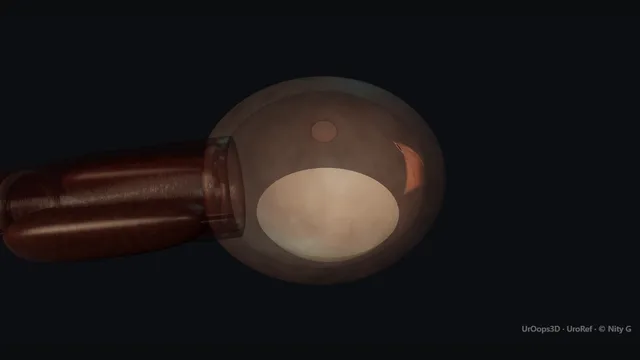
The catheterised empty bladder and the routes BCG can leave it. Schematic, not to scale; relationships only.
The catheter passes the bulbar curve, the sphincter and the prostatic urethra to an empty bladder, and the dose runs in to lie across the trigone and the healed resection bed.
The whole urothelium is the target, which is why the bladder is empty and the patient turns.
The routes out of the bladder are the ones that matter: the prostatic ducts to the prostate and epididymis, and a torn urethra or bleeding bed to the blood.
›The resection bed - raw urothelium for two to four weeks after TURBT; BCG waits until it has healed.
›Urethra and sphincter - the catheter passes them without trauma; blood here means the dose is deferred.
›The empty bladder - drained to nothing before the dose so that 50 ml bathes the whole urothelium.
›The urothelium - the target: BCG attaches to it and provokes the immune response that clears residual disease and carcinoma in situ.
›Prostate and epididymis - reached by reflux of BCG along the ducts; granulomatous prostatitis and epididymo-orchitis are late local toxicities.
›The bloodstream - entered through a traumatised urethra or a bleeding bed; the route to BCG sepsis.
›The catheter and the closed syringe - 12 or 14 French, lidocaine gel, gloves and gown; a live organism handled as one.
Who gets BCGHigh-risk non-muscle-invasive bladder cancer: high-grade Ta or T1 disease, carcinoma in situ, and selected intermediate-risk disease where recurrence has been frequent. The premise is a complete resection, with detrusor muscle in the specimen for anything high grade, and a re-resection at two to six weeks for T1 disease, for high-grade tumour without muscle in the specimen, and where the first resection was incomplete. BCG given after an inadequate resection treats nothing and delays the cystectomy that a man with unrecognised muscle invasion needs. The multidisciplinary meeting confirms the risk group and the plan, and the patient is told that this is a course of treatment lasting years, not a single dose.
Timing and the checks before every doseThe first dose is given two to four weeks after resection, once the resection bed has healed; earlier risks systemic absorption through raw urothelium. Before every dose, induction or maintenance, the same questions: any visible haematuria, any symptoms of infection or a positive urine culture, any traumatic catheterisation in the last two weeks, any fever or illness since the last dose, and any new immunosuppression. A yes to any of them defers the dose by a week. The tuberculin test is not required, but active tuberculosis, immunosuppression and pregnancy are contraindications that are asked about at the start. where it bites: haematuria, infection or a traumatic catheter in the last fortnight means the dose is deferred; BCG into a bleeding urothelium is BCG into the blood.
PreparationThe dose is reconstituted by pharmacy or in a designated area under the local protocol, never on the open ward, and delivered in a closed syringe or bag. The person giving it wears gloves, a gown and eye protection; BCG is a live organism and a spill is cleaned with the local disinfectant. The patient has restricted fluids for a few hours beforehand and stops diuretics on the morning, so that the dose is not diluted and can be held. The patient empties the bladder before the catheter goes in, the identity and the dose are checked against the prescription by two people, and the bladder is confirmed empty on the catheter before anything is instilled.
The catheter, passed atraumaticallyA 12 or 14 French catheter, plenty of lidocaine gel and time, the penis held up to straighten the bulbar curve and the patient breathing at the sphincter: the least traumatic catheterisation of the day. Any blood on the catheter or in the drained urine means the urothelium is open and the dose is deferred, however far the patient has travelled. The catheter is advanced to the hub and the residual drained completely, because BCG needs an empty bladder to reach the whole urothelium. A difficult catheter is not forced; the dose is deferred and the next attempt is with a coudé or under vision. where it bites: blood on the catheter is the one absolute rule: the dose is not given today.
InstillationThe reconstituted dose, a full vial in about 50 ml of saline, is instilled slowly through the catheter by gravity or gentle syringe pressure into the empty bladder, followed by a small flush of saline so that none is left in the catheter. Then either the catheter is removed, which is usual and most comfortable, or it is clamped for the dwell and removed afterwards in a patient who cannot hold the dose. The syringe, the catheter and the gloves go into the clinical waste for live organisms. The patient is told the time and that nothing should be drunk until the dose has been voided.
Two hours, turning, then the toiletThe dose is held for two hours, or as long as the patient can manage up to two hours, turning from side to side and front to back every fifteen minutes so that the whole urothelium is bathed. Then the patient voids, sitting down to avoid splashing, and for the next six hours after each void undiluted household bleach is poured into the toilet, left for fifteen minutes and flushed with the lid down. Hands and genitals are washed after voiding, fluids are increased to flush the bladder, and a condom is used for sex for a week. The patient goes home with the contact number and the fever rule written down.
The scheduleInduction is six instillations at weekly intervals. Maintenance follows for the patient who tolerates induction: three weekly instillations at three months, six months and then every six months, for one year in intermediate-risk disease and for three years in high-risk disease, which is the schedule that has been shown to reduce progression as well as recurrence. Many patients do not complete three years because of toxicity, and a reduced schedule is a shared decision with the multidisciplinary team, particularly during BCG shortages when a priority pathway applies. Each dose is preceded by the same checks as the first.
Toxicity and the fever ruleCystitis with frequency, dysuria and haematuria for a day or two after each dose is expected and treated with fluids, analgesia and anticholinergics; if it lasts beyond a few days the next dose is deferred or reduced. A low fever under 38.5 for less than 48 hours is common and settles. The rule is a fever over 38.5, or any fever lasting beyond 48 hours, or rigors, malaise or a systemically unwell patient: that is systemic BCG until proved otherwise. It needs admission, cultures for bacteria and mycobacteria, a chest radiograph, and antituberculous treatment with isoniazid, rifampicin and ethambutol, with steroids for BCG sepsis, on the advice of infectious diseases. BCG is stopped permanently after sepsis. where it bites: fever over 38.5 or beyond 48 hours after a dose is systemic BCG until proved otherwise; not another course of ciprofloxacin.
Response and failureCystoscopy at three months, after induction, with cytology, is the first assessment; carcinoma in situ is also judged with cytology and biopsy. Persistent or recurrent high-grade disease defines the failures: BCG-refractory disease with high-grade tumour at three months, BCG-relapsing disease with high-grade recurrence within six to twelve months of adequate treatment, and together these form BCG-unresponsive disease, for which more BCG does not work. The treatment is radical cystectomy, offered promptly because progression to muscle invasion during further intravesical treatment loses the window of cure. Bladder-sparing alternatives are for the unfit or unwilling within a trial or a specialist pathway. The note for every dose records the checks, the catheter, the dose and the tolerance.
The spatial relationships the animation is built to make automatic. Before you read each one, ask yourself: at this point in the operation, what is about to go wrong, and what is my first move? The save for each sits in the Complications tab.
RiskThe traumatised urethra - blood on the catheter: the dose is deferred, without exception.
RiskThe unhealed bed or suspected perforation - less than two weeks from resection, or a perforation at TURBT: BCG waits.
RiskInfected urine - symptoms or a positive culture: treat first, instil later.
RiskThe unrecognised systemic illness - fever over 38.5 or beyond 48 hours treated as cystitis; the delay is what kills.
Trigger each of these live in the Animation tab, then read the save: the first move, the escalation trigger, and the line that goes in the op note.
BCG cystitis
frequency, dysuria, urgency and haematuria for a day or two after each dose, worsening through the course.
The save
Fluids, simple analgesia and an anticholinergic; reassure that it is expected.first move
Culture the urine to exclude a bacterial infection that mimics it.
Symptoms lasting beyond a few days: defer the next dose until they settle; consider a reduced dose or a shortened maintenance schedule with the multidisciplinary team.
Severe cystitis with a contracting bladder or symptoms that do not resolve: stop BCG, cystoscopy, and a short course of antituberculous treatment on specialist advice.escalation trigger
Note: the grade of cystitis after each dose, deferrals and any dose change.document
Systemic BCG infection and sepsis
fever over 38.5 or beyond 48 hours, rigors, hypotension, or a pneumonitis or hepatitis days to weeks after a dose, particularly after a traumatic catheter.
The save
Admit; blood and urine cultures for bacteria and mycobacteria, a chest radiograph and liver function tests; fluids and broad-spectrum antibiotics for the bacterial sepsis that may coexist.first move
Start isoniazid, rifampicin and ethambutol on the advice of infectious diseases without waiting for cultures, which are slow and often negative.
Shock, respiratory failure or organ involvement: critical care and high-dose corticosteroids alongside antituberculous treatment.escalation trigger
BCG is stopped permanently; the cancer plan is remade at the multidisciplinary meeting.
Note: the dose and its date, the catheterisation that preceded it, the treatment started and who advised it.document
Traumatic catheterisation before the dose
blood on the catheter or in the drained urine, or a difficult passage: the urethra is open to the bloodstream.
The save
Do not give the dose. The patient is told why and goes home.first move
Rebook in a week; the next catheter is a coudé or passed under vision by a urologist if the passage was hard.
A patient who cannot be catheterised atraumatically at all: the multidisciplinary team decides whether BCG can continue.escalation trigger
Note: the deferral and its reason, and the plan for the next attempt.document
Granulomatous prostatitis, epididymo-orchitis or upper tract disease
a hard prostate with a rising PSA, a swollen tender epididymis, or loin pain and a hydronephrosis, weeks to months into the course.
The save
Examine, culture, and image: ultrasound of the scrotum or kidneys as appropriate.first move
A hard prostate after BCG is granulomatous prostatitis until proved otherwise; biopsy before a cancer diagnosis is made.
Epididymo-orchitis or upper tract involvement: stop BCG, antituberculous treatment for several months on infectious diseases advice; an obstructed kidney is drained.escalation trigger
Note: the finding, the treatment, and the decision about continuing BCG.document
BCG-unresponsive disease
high-grade tumour or carcinoma in situ at three months, or high-grade recurrence within a year of adequate BCG: the drug has failed.
The save
Complete staging: re-resection with muscle, cytology, upper tract imaging and a CT of the chest, abdomen and pelvis.first move
Confirm the definition with the multidisciplinary team; a low-grade Ta recurrence is not failure and does not need cystectomy.
Radical cystectomy is offered promptly for BCG-unresponsive disease; bladder-sparing options are only for the unfit or unwilling within a specialist pathway.escalation trigger
Note: the dates and doses of BCG received, the histology that defines the failure, and the multidisciplinary decision.document
When the case turns: the problem, then the next move.
ActionDipstick shows blood before the dose - look at the urine: visible haematuria defers the dose; trace non-visible blood with a clean catheter and healed bed is a judgement by the local protocol.
ActionThe catheter will not pass - stop; no force, no dose; rebook with a coudé or a urologist under vision.
ActionThe patient cannot hold the dose for two hours - an hour is acceptable; an anticholinergic before the next dose, and the catheter clamped for the dwell if needed.
ActionFever the evening after the dose - under 38.5 and gone within 48 hours is expected; over 38.5 or persisting is admission and the sepsis pathway.
ActionMissed a dose in induction - give it the following week and continue; more than two missed doses and the course is discussed with the multidisciplinary team.
ActionBCG shortage - the priority pathway: high-risk patients first, reduced maintenance, and intravesical chemotherapy for intermediate-risk disease.
The examiner stems this scene prepares you for. Try to answer out loud first, then reveal, and learn the discriminator, the detail that turns a pass into a strong pass.
QWho would you give intravesical BCG to and how would you counsel them?reveal answer
I would offer BCG to a patient with high-risk non-muscle-invasive bladder cancer, that is high-grade Ta or T1 disease or carcinoma in situ, and to selected intermediate-risk patients with frequent recurrence, after a complete resection with detrusor in the specimen and a re-resection where indicated, and after the multidisciplinary meeting had confirmed the risk group.
I would explain that BCG is a live weakened tuberculosis vaccine instilled into the bladder through a catheter, held for two hours, given weekly for six weeks and then as maintenance for one to three years depending on risk, and that with maintenance it reduces both recurrence and progression better than chemotherapy.
I would describe the expected cystitis after each dose, the precautions with bleach in the toilet for six hours, and the rule that a fever over 38.5 or beyond 48 hours means hospital.
I would explain the contraindications, that a dose is deferred for haematuria, infection or a traumatic catheter, and that failure at three months or early high-grade recurrence means cystectomy, so that this is not a surprise later.
Strong pass
Say all three
The resection quality and re-resection as preconditions
Maintenance as the part that reduces progression
The cystectomy conversation had at the start
Examiner note
The resection quality and re-resection as preconditions, maintenance as the part that reduces progression, and the cystectomy conversation had at the start.
QDescribe how you would give a dose of BCG.reveal answer
Before the dose I would confirm the patient and the prescription, ask about haematuria, urinary symptoms or a positive culture, any traumatic catheterisation or difficult catheter in the last two weeks, fever after the previous dose and any new immunosuppression, deferring the dose for any of them.
The patient would have restricted fluids for a few hours and emptied the bladder.
Wearing gloves, gown and eye protection, I would pass a 12 or 14 French catheter with lidocaine gel and time, as atraumatically as any catheter I have ever passed, and I would not give the dose if there was blood on the catheter.
I would drain the bladder to empty, instil the reconstituted vial in about 50 ml of saline slowly, flush the catheter with a little saline, and remove it.
The patient holds the dose for up to two hours, turning every fifteen minutes, then voids sitting down and uses bleach in the toilet for six hours.
I would dispose of the equipment as live clinical waste, give the written fever rule and the contact number, and document the checks, the catheterisation and the tolerance.
Strong pass
Say all three
The pre-dose checks recited before the catheter
Blood on the catheter as an absolute deferral
The empty bladder before instillation
Examiner note
The pre-dose checks recited before the catheter, blood on the catheter as an absolute deferral, and the empty bladder before instillation.
QA man rings three days after his fourth BCG dose with a fever of 39 and rigors. What do you do?reveal answer
This is systemic BCG infection until proved otherwise, and I would admit him.
A low fever settling within 48 hours is expected after BCG, but a fever over 38.5, one lasting beyond 48 hours, or rigors and systemic illness are not, and the diagnosis is often delayed because the symptoms are put down to cystitis.
I would ask whether the catheterisation was traumatic, examine him for hypotension, respiratory signs and hepatomegaly, and send blood and urine cultures including mycobacterial cultures, a full blood count, liver function tests and a chest radiograph.
I would give fluids and broad-spectrum antibiotics for the bacterial urosepsis that may coexist, and start isoniazid, rifampicin and ethambutol on the advice of infectious diseases without waiting for cultures, which take weeks and are often negative.
If he was shocked or had respiratory failure or hepatitis I would involve critical care and add high-dose corticosteroids.
BCG would be stopped permanently and his bladder cancer plan remade at the multidisciplinary meeting.
I would document the dose, the catheter and the treatment started.
Strong pass
Say all three
Recognising systemic BCG from the fever pattern
Starting antituberculous treatment empirically
Steroids for sepsis
Examiner note
Recognising systemic BCG from the fever pattern, starting antituberculous treatment empirically, and steroids for sepsis.
QWhat is BCG-unresponsive disease and what do you do about it?reveal answer
BCG-unresponsive disease is the group in whom further BCG will not work and who need definitive treatment.
It includes BCG-refractory disease, where high-grade Ta or T1 tumour or carcinoma in situ persists at the three-month assessment after induction, or T1 high-grade disease is found at the first three-month cystoscopy;
and BCG-relapsing disease, where high-grade recurrence appears within six months of adequate BCG, or carcinoma in situ within twelve months, adequate meaning at least five of six induction doses and two of three maintenance doses.
The assessment is a re-resection with muscle, cytology, upper tract imaging and staging CT, confirmed at the multidisciplinary meeting.
The treatment is radical cystectomy offered promptly, because continued intravesical treatment risks progression to muscle-invasive disease and loses the window of cure.
Bladder-sparing options, such as device-assisted chemotherapy or newer systemic and intravesical agents, are reserved for the unfit or unwilling within a specialist or trial pathway.
A low-grade Ta recurrence during BCG is not failure and is managed with resection and continued treatment.
Strong pass
Say both
Separating refractory from relapsing with the intervals and the definition of adequate BCG
The low-grade recurrence that is not failure
Examiner note
Separating refractory from relapsing with the intervals and the definition of adequate BCG, and the low-grade recurrence that is not failure.
Say it aloud, then reveal. Reading is not remembering.
01The relationshipSay the critical spatial relationship out loud, then reveal.reveal
Memory frame
The catheter passes the bulbar curve, the sphincter and the prostatic urethra to an empty bladder, and the dose runs in to lie across the trigone and the healed resection bed.
Why?
The whole urothelium is the target, which is why the bladder is empty and the patient turns. The routes out of the bladder are the ones that matter: the prostatic ducts to the prostate and epididymis, and a torn urethra or bleeding bed to the blood.
02The first moveBCG cystitis. Your first move?reveal
First move
Fluids, simple analgesia and an anticholinergic; reassure that it is expected.
03The escalation triggerBCG cystitis. What makes you call for help?reveal
Escalate when
Severe cystitis with a contracting bladder or symptoms that do not resolve
More detail
Severe cystitis with a contracting bladder or symptoms that do not resolve: stop BCG, cystoscopy, and a short course of antituberculous treatment on specialist advice.
04The discriminatorWhat turns a pass into a strong pass?reveal
Strong pass
Say all three
The resection quality and re-resection as preconditions
Maintenance as the part that reduces progression
The cystectomy conversation had at the start
Examiner note
The resection quality and re-resection as preconditions, maintenance as the part that reduces progression, and the cystectomy conversation had at the start.
05The pitfallWhere does this operation bite first?reveal
Pitfall
The traumatised urethra
Why?
blood on the catheter: the dose is deferred, without exception.
Revision practice with self-marked answers, not an assessment of clinical competence. Kept in
this browser only; it does not sync between devices.