
Immediate intravesical chemotherapy after bladder tumour resection
A protocol-governed single bladder instillation of cytotoxic therapy soon after selected TURBT, only when resection findings and bladder integrity make instillation appropriate.
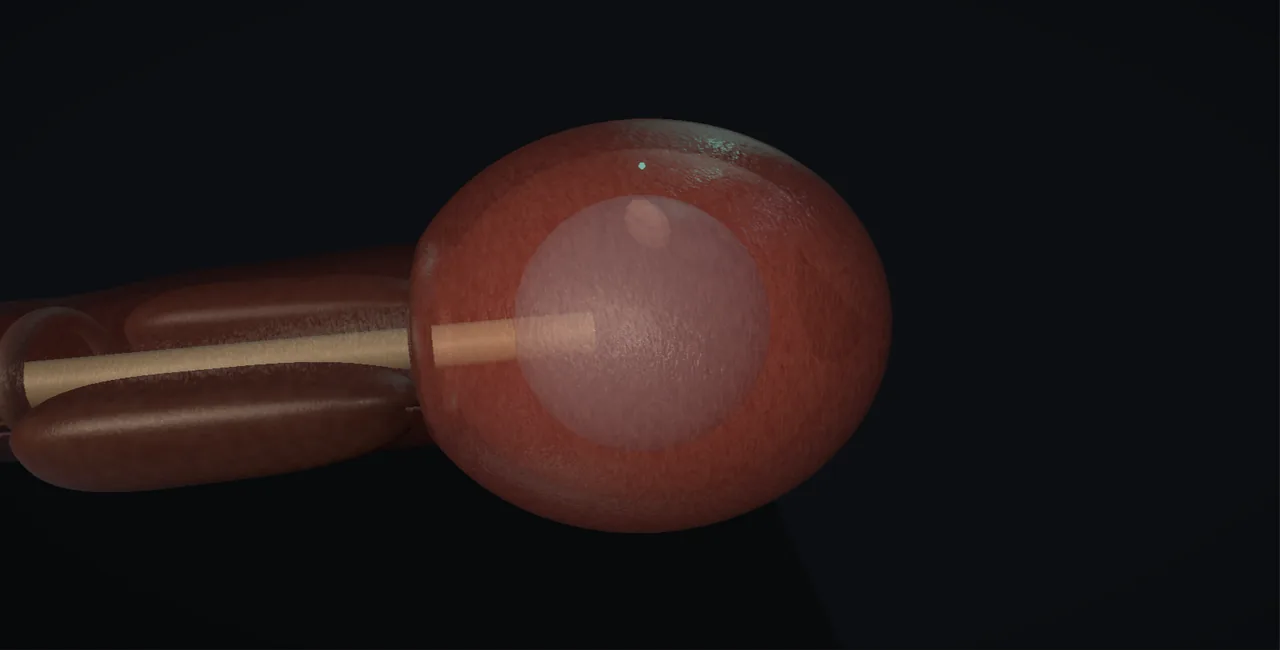 Interactive 3D Interactive immediate mitomycin model Open the 3D animation
Teaching catalogue only. This coverage record is not a patient pathway or operative instruction.
Typical place in practice
Reduction of early tumour-cell reimplantation and recurrence risk in appropriately selected non-muscle-invasive bladder cancer pathways.
Alternatives and neighbouring procedures
Omission when contraindicated, irrigation pathways or later risk-adapted intravesical therapy according to pathology and guideline stratification.
Same procedure family, explicit technique branches
These are variations of this canonical operation. Complication modules below identify whether they apply to all branches or only to named approaches.
Recovery-area immediate instillation
The agent is delivered through a confirmed bladder catheter after operative findings are reviewed.
Theatre immediate instillation
The instillation occurs within the operative workflow once haemostasis and bladder integrity are judged suitable.
Closed-system intravesical delivery
A closed handling and drainage pathway limits staff and environmental exposure.
High-level sequence
Coverage outline only; not a step-by-step technical guide.
- Verify eligibility against pathology intent and operative findings
- Explicitly exclude suspected perforation, major bleeding or unsafe catheter position
- Confirm agent, patient and closed handling pathway
- Instil and retain according to the local authorised protocol
- Drain or release safely and document exposure, tolerance and exceptions
Every failure mode is its own module.
Timing and variation coverage are recorded for each module.
Extravasation with chemical tissue injury
Instillation through a perforated bladder or misplaced catheter can expose perivesical tissues to a cytotoxic agent and cause severe local injury.
Applies to: Recovery-area immediate instillation · Theatre immediate instillation · Closed-system intravesical deliveryChemical cystitis, urgency or pain
Urothelial irritation can cause dysuria, frequency, urgency, bladder spasm and pelvic pain.
Applies to: Recovery-area immediate instillation · Theatre immediate instillation · Closed-system intravesical deliveryHaematuria or clot-related drainage failure
A bleeding resection bed may worsen symptoms, block the catheter and complicate safe agent removal.
Applies to: Recovery-area immediate instillation · Theatre immediate instillation · Closed-system intravesical deliveryUrinary infection
Instrumentation and catheter manipulation can contribute to infection after TURBT.
Applies to: Recovery-area immediate instillation · Theatre immediate instillation · Closed-system intravesical deliverySystemic or hypersensitivity reaction
Unexpected absorption or agent sensitivity may produce systemic symptoms requiring recognition beyond routine bladder discomfort.
Applies to: Recovery-area immediate instillation · Theatre immediate instillation · Closed-system intravesical deliveryOccupational or environmental exposure
Leaks, disconnections and unsafe disposal can expose staff, carers or the environment to cytotoxic material.
Applies to: Recovery-area immediate instillation · Theatre immediate instillation · Closed-system intravesical deliveryWrong-patient, wrong-agent or protocol deviation
A selection, identification, timing or documentation failure can create direct harm and undermine the intended oncological pathway.
Applies to: Recovery-area immediate instillation · Theatre immediate instillation · Closed-system intravesical deliverySources for this module
TURBT quality, repeat resection and intravesical-treatment pathways.
Accessed 2026-08-03 · opens source European Association of Urology EAU Guidelines on Urological InfectionsInfection prevention, recognition and procedure-associated infection context.
Accessed 2026-08-03 · opens source British Association of Urological Surgeons Patient information leaflets by procedureUK patient-facing procedure, alternatives, recovery and complication framing.
Accessed 2026-08-03 · opens source