
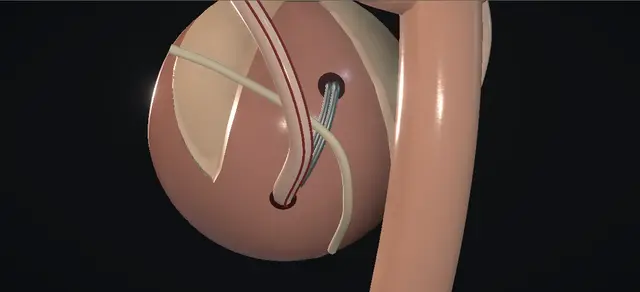
Ureteric obstruction from angulation or compression
- the ureter turns sharply at the new hiatus, or is squeezed in the hiatus, the tunnel or a closing stitch; oedema can do the same for a few days.
- A hiatus placed too high or too lateral, on the mobile part of the bladder, kinks the ureter as the bladder fills; the new hiatus belongs on the fixed posterior wall.
The save
- On the table: if the ureter is angulated at the new hiatus, lengthen the cut in its inferior lip and lay the ureter again before any stitch. first move
- Prove drainage before closing: efflux at the new orifice and a fine tube that passes freely.
- After surgery, loin pain, vomiting, fever or a falling urine output prompts an ultrasound for new or worsening dilatation.
- Worsening dilatation with pain, infection or a rising creatinine needs drainage and senior paediatric urology review. escalation trigger
- Op note: where the new hiatus was made, the relieving cut, efflux seen, tube passed, whether a stent was left. document