
Procedural treatment of paediatric vesicoureteric reflux
Endoscopic injection and open/robotic ureteric reimplantation pathways for selected reflux, retaining bilateral and duplex-system variations.
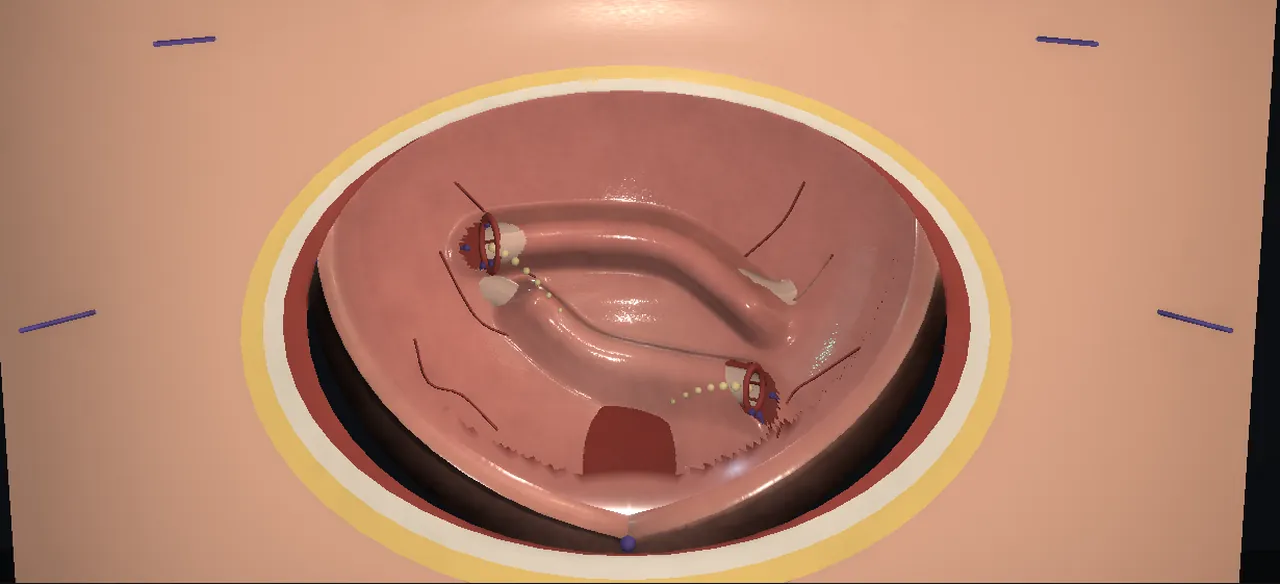 Interactive 3D Interactive Cohen reimplantation Open the 3D animation 3D Interactive extravesical (Lich-Gregoir) reimplantation 3D Interactive Politano-Leadbetter reimplantation
Teaching catalogue only. This coverage record is not a patient pathway or operative instruction.
Typical place in practice
Selected persistent high-risk or symptomatic reflux after integrating infection history, renal status, bladder-bowel function, age and family preference.
Alternatives and neighbouring procedures
Observation, bladder-bowel treatment and antimicrobial prevention strategies according to the child’s risk profile.
Same procedure family, explicit technique branches
These are variations of this canonical operation. Complication modules below identify whether they apply to all branches or only to named approaches.
Endoscopic subureteric injection
Creates support beneath or within the intramural ureter.
Open intravesical reimplantation
Creates a longer submucosal tunnel through an opened bladder.
Open extravesical reimplantation
Reconstructs the antireflux mechanism from outside the bladder.
Robotic extravesical reimplantation
Applies an extravesical repair through robot-assisted access.
High-level sequence
Coverage outline only; not a step-by-step technical guide.
- Define reflux, renal status and bladder-bowel function
- Select injection or reconstruction and plan unilateral/bilateral anatomy
- Protect ureteric blood supply and create the intended antireflux mechanism
- Confirm ureteric patency and bladder closure where applicable
- Monitor voiding, infection, obstruction and renal growth
Operative notes
Concise operative notes covering the key steps, landmarks and watch points, in the order you encounter them.
Reimplantation in children
What it does: re-route a child's ureter into the bladder.
- Pfannenstiel. Open the bladder.
- Feeding tubes up both ureters.
- LOOK FOR DOUBLE SYSTEMS (2 orifices 1 side).
- Cut round the orifice.
- Free the ureter OUTSIDE the bladder wall first.
- Peel muscle off the ureter.
- Pull it in till it reaches skin level, no tension.
- New tunnel under the mucosa, 3-4x ureter width.
- 2 tunnels must not cross each other.
- Join mucosa to mucosa. First stitch deep, at the outer edge.
- 1-side job: small Y-V at the other ureter stops new reflux.
- Boys: supra catheter. Girls: urethral.
- Antibiotic cover 4 weeks. Scan at 6 weeks. Reflux study only if infection.
From the UroRef Operative Quick Guide. Open the note page →
Every failure mode is its own module.
Timing and variation coverage are recorded for each module.
Ureteric obstruction
Excess injection, tunnel tightness, oedema, kinking or ischaemia can obstruct drainage.
Applies to: All variantsPersistent or recurrent reflux
The antireflux mechanism may be incomplete or change with growth and bladder function.
Applies to: All variantsUrinary infection
Infection can occur despite technically successful correction and may signal residual bladder-bowel dysfunction.
Applies to: All variantsVoiding dysfunction or retention
Bilateral peri-ureteric dissection can temporarily or persistently impair bladder emptying.
Applies to: Open extravesical reimplantation · Robotic extravesical reimplantationBladder leak, haematuria or spasm
Cystotomy and intravesical dissection add bladder-healing morbidity.
Applies to: Open intravesical reimplantationBulking-agent migration or local reaction
Injected material can move, calcify or form a mound that complicates later imaging or surgery.
Applies to: Endoscopic subureteric injectionBowel or port-site injury
Abdominal minimally invasive access adds visceral and port risks.
Applies to: Robotic extravesical reimplantation