
Posterior urethral valve ablation and urinary diversion
Endoscopic valve ablation with temporary vesicostomy or upper-tract diversion options for infants in whom safe endoscopic decompression is not achievable.
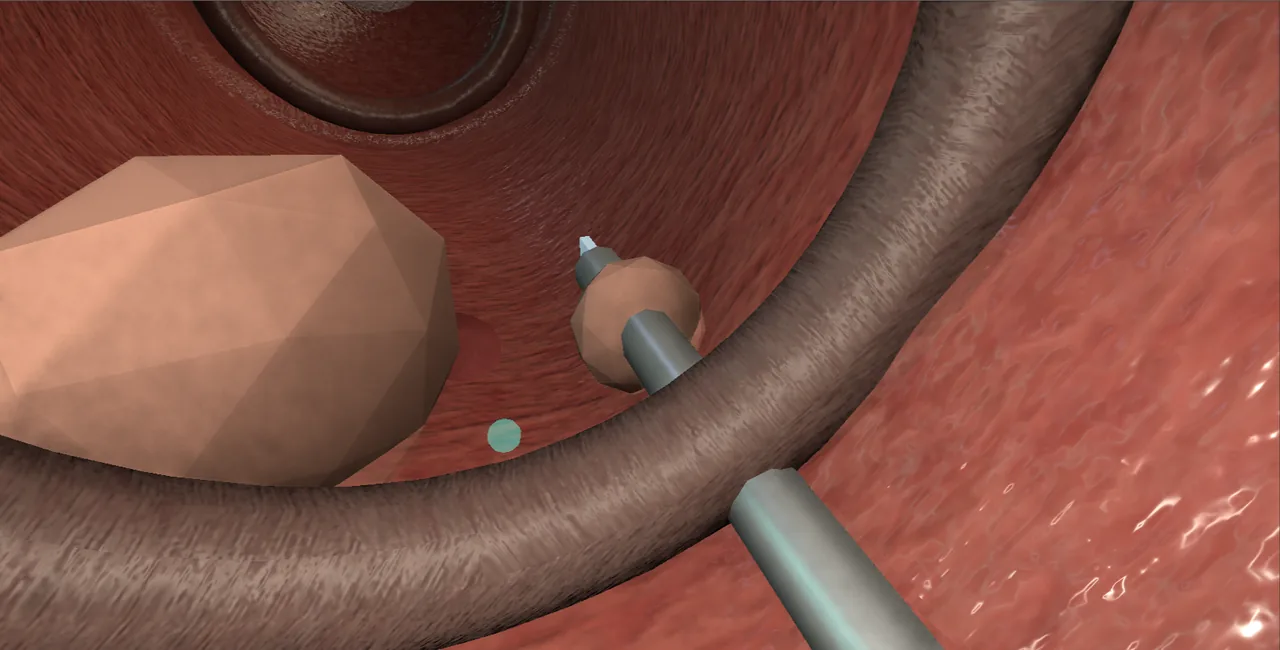 Interactive 3D Interactive valve ablation, beat by beat Open the 3D animation
Teaching catalogue only. This coverage record is not a patient pathway or operative instruction.
Typical place in practice
Confirmed posterior urethral obstruction after stabilisation and bladder drainage, with renal, respiratory and bladder status guiding timing and route.
Alternatives and neighbouring procedures
Temporary bladder catheter drainage before definitive ablation; ongoing nephrological and bladder management remain necessary after an anatomically successful procedure.
Same procedure family, explicit technique branches
These are variations of this canonical operation. Complication modules below identify whether they apply to all branches or only to named approaches.
Endoscopic valve ablation
Divides obstructing leaflets while protecting urethra and sphincter.
Cutaneous vesicostomy
Provides dependable drainage when urethral instrumentation is unsafe or inadequate.
Upper-tract diversion
A rare specialist route when bladder drainage does not adequately decompress the upper tracts.
Vesicostomy closure and later outlet reassessment
Restores urethral voiding when the child and bladder are ready.
High-level sequence
Coverage outline only; not a step-by-step technical guide.
- Stabilise and establish low-pressure bladder drainage
- Define urethral anatomy and renal/bladder status
- Ablate valves or create temporary diversion
- Confirm unobstructed drainage without sphincter injury
- Follow renal function, bladder dynamics, continence and growth long term
Every failure mode is its own module.
Timing and variation coverage are recorded for each module.
Urethral injury or stricture
Instrumentation and thermal or mechanical injury can scar the narrow infant urethra.
Applies to: Endoscopic valve ablationResidual valve tissue or persistent obstruction
Incomplete division can leave an obstructive membrane requiring reassessment.
Applies to: Endoscopic valve ablationUrinary infection
Obstruction, instrumentation and external drainage all increase infection risk.
Applies to: All variantsVesicostomy stenosis, prolapse or skin injury
The stoma can narrow, prolapse, leak onto skin or become difficult to manage.
Applies to: Cutaneous vesicostomy · Vesicostomy closure and later outlet reassessmentUreterostomy obstruction or loss of ureteric length
An upper-tract stoma can compromise drainage and make later reconstruction more complex.
Applies to: Upper-tract diversionPersistent bladder dysfunction, incontinence or renal decline
Valve ablation relieves anatomy but does not reverse established bladder and kidney injury.
Applies to: All variants