
Paediatric urogenital sinus and cloacal reconstruction
Multidisciplinary reconstruction of shared urinary and genital channels, with rectal, sphincteric, reproductive and autonomy considerations central to planning.
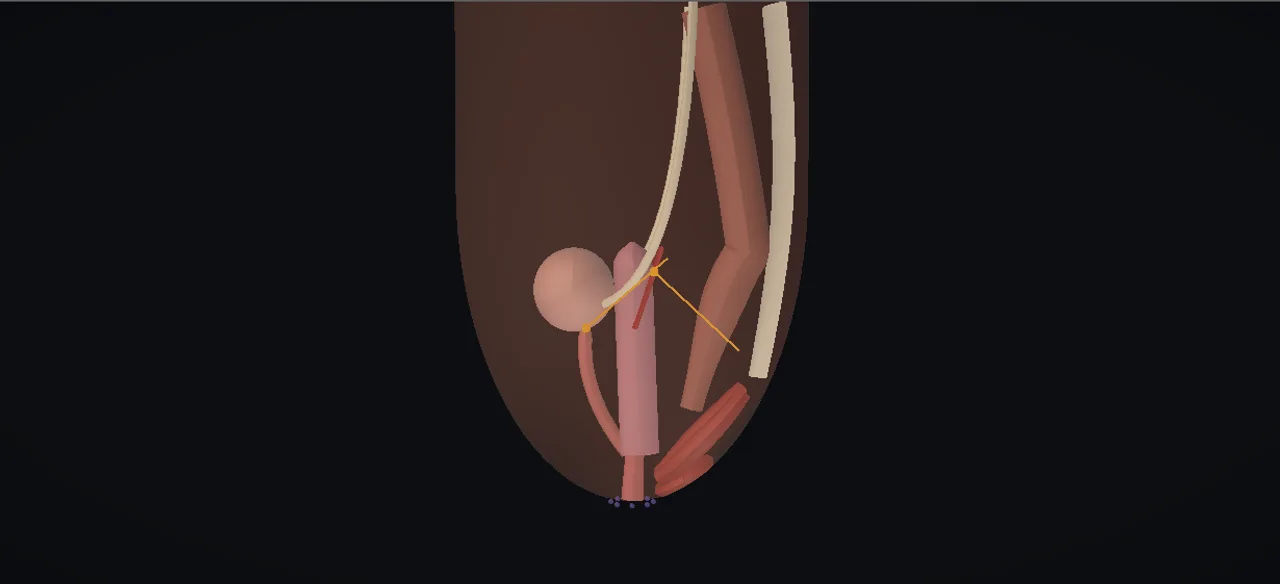 Interactive 3D Interactive cloacal reconstruction Open the 3D animation
Teaching catalogue only. This coverage record is not a patient pathway or operative instruction.
Typical place in practice
Selected obstructive, infectious, continence or functional indication after detailed anatomical mapping and age-appropriate shared decision-making.
Alternatives and neighbouring procedures
Observation, temporary drainage, deferral until the patient can participate more fully, or staged limited procedures according to symptoms and anatomy.
Same procedure family, explicit technique branches
These are variations of this canonical operation. Complication modules below identify whether they apply to all branches or only to named approaches.
Total or partial urogenital mobilisation
Separates or repositions urinary and genital outlets without substituting a long vaginal segment.
Vaginal pull-through or substitution
Creates a durable vaginal outlet for a high confluence or absent segment.
Combined cloacal reconstruction
Coordinates separation and reconstruction of all three systems.
Staged drainage and later definitive repair
Protects renal function or drains hydrocolpos before definitive reconstruction.
High-level sequence
Coverage outline only; not a step-by-step technical guide.
- Map common-channel length, confluence, bladder, ureters, vagina and rectum
- Agree goals, timing and consent within a specialist multidisciplinary pathway
- Establish distinct urinary, genital and anorectal planes
- Create well-perfused tension-free outlets with sphincter protection
- Follow renal, continence, menstrual, sexual and psychological outcomes into adulthood
Every failure mode is its own module.
Timing and variation coverage are recorded for each module.
Urethral, bladder, ureteric or rectal injury
Closely shared and developmentally variant planes make adjacent-organ injury a defining risk.
Applies to: All variantsUrinary, vaginal or rectal fistula
Breakdown between reconstructed systems can produce complex persistent leakage or infection.
Applies to: All variantsStenosis of urinary, vaginal or anorectal outlet
Scar and growth can narrow any reconstructed channel.
Applies to: All variantsUrinary or faecal incontinence
Congenital sphincter anatomy and reconstruction both influence continence.
Applies to: All variantsUrinary infection, hydrocolpos or upper-tract deterioration
Persistent obstruction or incomplete drainage can threaten renal function.
Applies to: All variantsGraft, flap or bowel-segment complication
Substitution tissue adds donor-site, mucus, stenosis and metabolic considerations.
Applies to: Vaginal pull-through or substitution · Combined cloacal reconstructionSexual, reproductive or psychological harm
Long-term evaluation must include autonomy, body image, menstruation, fertility and sexual function.
Applies to: All variants