
Urodynamic investigation
Physiological testing that relates bladder and abdominal pressures to filling, sensation, leakage and voiding, with fluoroscopic imaging added in selected complex cases.
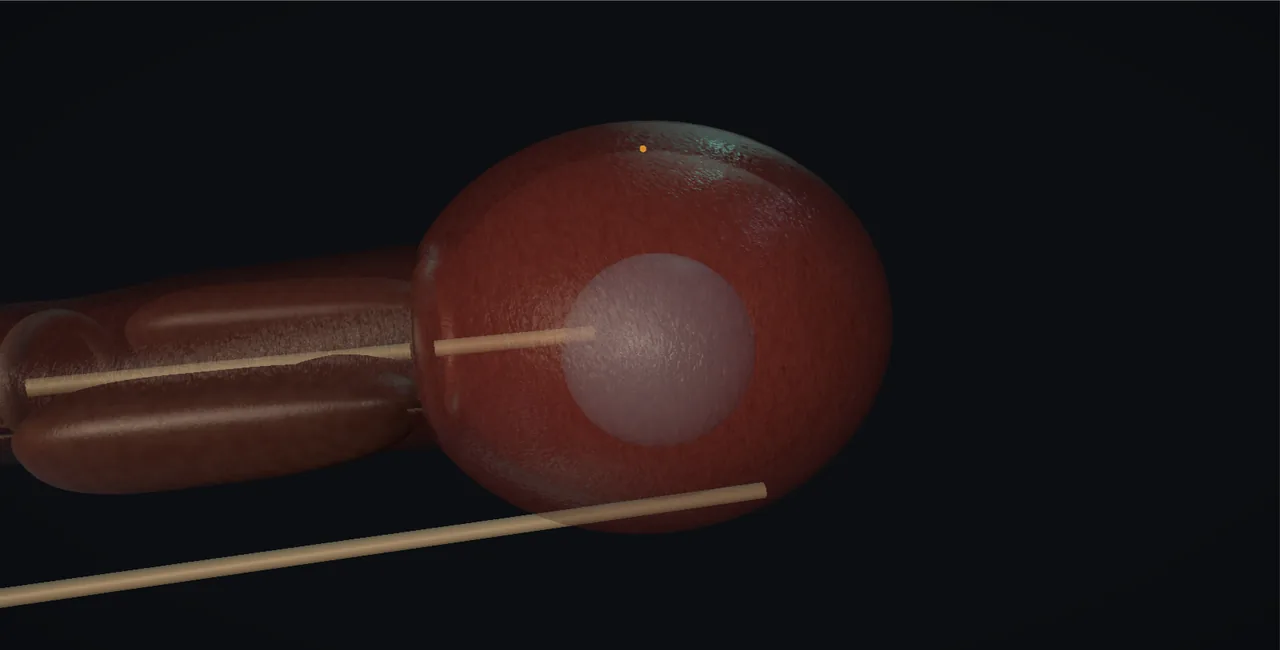 Interactive 3D Interactive urodynamics: the lines and the trace Open the 3D animation
Teaching catalogue only. This coverage record is not a patient pathway or operative instruction.
Typical place in practice
Clarifying lower urinary tract dysfunction when symptoms, examination and simpler tests do not adequately define the mechanism.
Alternatives and neighbouring procedures
Bladder diary, uroflowmetry, residual measurement, pad testing and symptom assessment may answer less complex questions.
Same procedure family, explicit technique branches
These are variations of this canonical operation. Complication modules below identify whether they apply to all branches or only to named approaches.
Conventional filling cystometry
Bladder and abdominal pressure channels are recorded during controlled filling.
Pressure-flow study
Detrusor pressure and flow are interpreted together during voiding.
Video urodynamics
Synchronous imaging adds anatomical information about reflux, outlet behaviour and bladder shape.
Ambulatory urodynamics
Pressures are recorded during more natural filling when conventional testing does not reproduce symptoms.
High-level sequence
Coverage outline only; not a step-by-step technical guide.
- Define the clinical question and screen for factors that invalidate or increase risk
- Calibrate and place pressure and filling catheters
- Record baseline signals and fill under a standardised protocol
- Reproduce and annotate symptoms, leakage and voiding
- Check trace quality and report findings against the original question
Every failure mode is its own module.
Timing and variation coverage are recorded for each module.
Urinary infection
Transurethral catheterisation can provoke symptomatic urinary infection after testing.
Applies to: Conventional filling cystometry · Pressure-flow study · Video urodynamics · Ambulatory urodynamicsUrethral discomfort or minor bleeding
Small diagnostic catheters can cause transient pain, dysuria or mucosal trauma.
Applies to: Conventional filling cystometry · Pressure-flow study · Video urodynamics · Ambulatory urodynamicsTransient retention or inability to void
Instrumentation, anxiety, position and underlying dysfunction may prevent representative voiding or precipitate short-lived retention.
Applies to: Pressure-flow study · Video urodynamicsAutonomic dysreflexia
Susceptible patients with neurological lesions may develop a dangerous autonomic response to filling or instrumentation.
Applies to: Conventional filling cystometry · Pressure-flow study · Video urodynamics · Ambulatory urodynamicsMisleading or non-diagnostic study
Artefact, non-physiological filling, absent symptom reproduction or poor-quality signals may support an incorrect mechanism.
Applies to: Conventional filling cystometry · Pressure-flow study · Video urodynamics · Ambulatory urodynamicsContrast or radiation-related burden
Fluoroscopy introduces ionising radiation and contrast-specific considerations that do not apply to pressure-only studies.
Applies to: Video urodynamicsSources for this module
Contemporary outlet procedures, selection, variants and functional trade-offs.
Accessed 2026-08-03 · opens source European Association of Urology EAU Guidelines on Urological InfectionsInfection prevention, recognition and procedure-associated infection context.
Accessed 2026-08-03 · opens source British Association of Urological Surgeons Patient information leaflets by procedureUK patient-facing procedure, alternatives, recovery and complication framing.
Accessed 2026-08-03 · opens source