
Bladder exstrophy and epispadias reconstruction
Lifelong staged or combined reconstruction of bladder, abdominal wall, outlet and external genitalia in the exstrophy–epispadias spectrum.
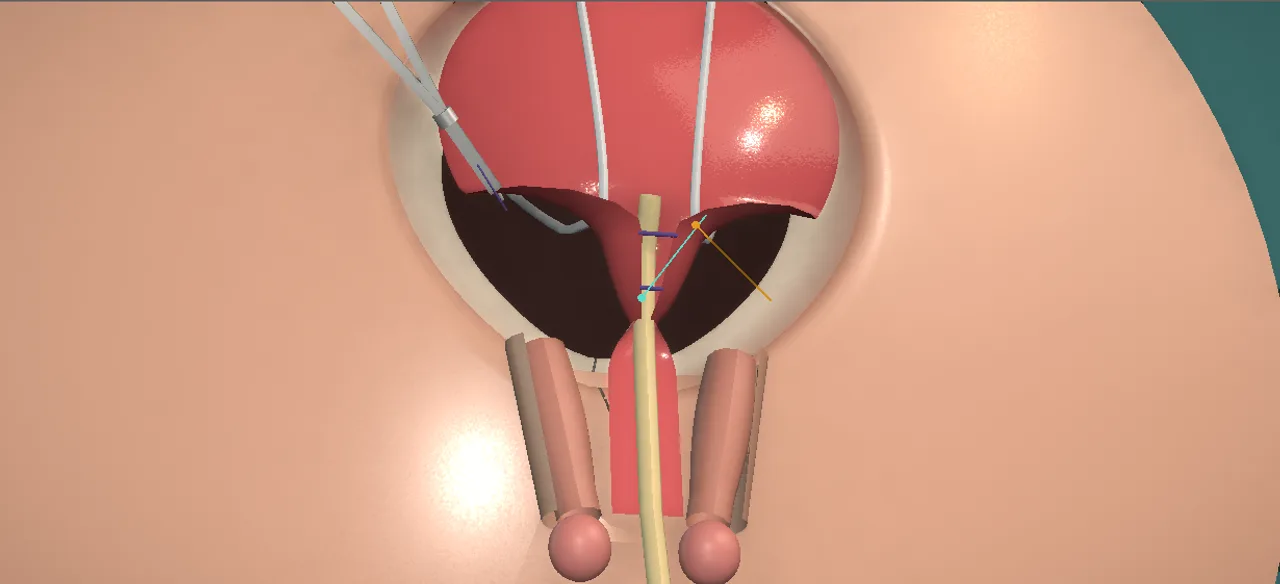 Interactive 3D Interactive exstrophy closure Open the 3D animation
Teaching catalogue only. This coverage record is not a patient pathway or operative instruction.
Typical place in practice
Newborn or delayed primary closure, later epispadias/outlet reconstruction, or revision for continence, prolapse, upper-tract or genital complications.
Alternatives and neighbouring procedures
Timing and staging vary by anatomy, bladder growth, pelvic geometry, family goals and specialist-centre protocol; diversion is a selected salvage pathway.
Same procedure family, explicit technique branches
These are variations of this canonical operation. Complication modules below identify whether they apply to all branches or only to named approaches.
Staged exstrophy repair
Separates abdominal/bladder closure, genital reconstruction and continence surgery.
Complete primary repair
Combines major elements in an initial procedure, with later revisions as needed.
Bladder-neck reconstruction
Aims to improve continence once capacity and anatomy are suitable.
Revision, augmentation or diversion
Addresses failed closure, small high-pressure bladder, fistula, prolapse or refractory incontinence.
High-level sequence
Coverage outline only; not a step-by-step technical guide.
- Coordinate multidisciplinary neonatal and lifelong plan
- Mobilise bladder plates and abdominal wall while protecting blood supply
- Close bladder and posterior urethra without tension
- Reconstruct genitalia and later outlet according to the staged strategy
- Monitor bladder growth, renal function, continence, sexual function and malignancy risk
Every failure mode is its own module.
Timing and variation coverage are recorded for each module.
Bladder or abdominal-wall dehiscence
Tension, pelvic geometry, infection or poor tissue perfusion can disrupt primary closure.
Applies to: All variantsUrinary fistula or urethral breakdown
Complex multi-layer urinary reconstruction can develop persistent leakage.
Applies to: All variantsUreteric obstruction, reflux or upper-tract damage
Abnormal trigonal anatomy, outlet resistance and repeated reconstruction affect renal drainage.
Applies to: All variantsPersistent incontinence or unsafe bladder pressure
Anatomical closure does not guarantee adequate capacity, compliance or outlet function.
Applies to: All variantsPenile or clitoral injury, curvature or sexual dysfunction
Genital reconstruction and congenital anatomy can affect sensation, dimensions and sexual function.
Applies to: All variantsPelvic, limb or osteotomy morbidity
Pelvic osteotomy and immobilisation add orthopaedic, neurovascular and wound risks.
Applies to: Staged exstrophy repair · Complete primary repairStone, infection and later malignancy
Chronic exposed/reconstructed urothelium, stasis and infection require lifelong surveillance.
Applies to: All variantsNeed for repeated staged and revision surgery
Multiple operations are commonly part of the care pathway rather than a single technical endpoint.
Applies to: All variants