
Endoscopic treatment of bladder-neck and vesicourethral stenosis
Endoscopic incision, resection or dilatation of a scarred bladder neck or post-prostatectomy anastomosis, with rectal and continence consequences kept visible.
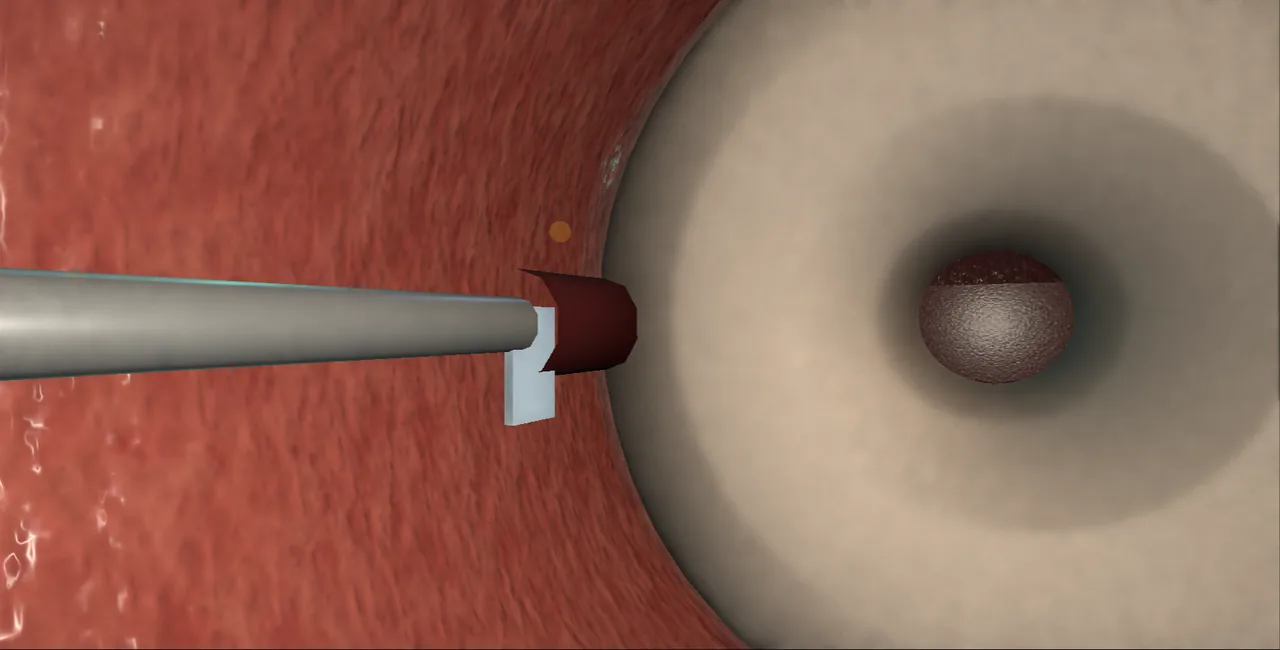 Interactive 3D Interactive bladder neck incision for stenosis Open the 3D animation
Teaching catalogue only. This coverage record is not a patient pathway or operative instruction.
Typical place in practice
Symptomatic or access-limiting stenosis after prostate or bladder-neck treatment when an endoscopic attempt is appropriate.
Alternatives and neighbouring procedures
Observation, catheter strategies, open or robotic reconstruction, or diversion for refractory devastated outlets.
Same procedure family, explicit technique branches
These are variations of this canonical operation. Complication modules below identify whether they apply to all branches or only to named approaches.
Radial incision
Releases the scar at selected positions while avoiding vulnerable adjacent structures.
Resection
Removes a more substantial stenotic ring when appropriate.
Balloon or graduated dilatation
Expands the stenosis without formal resection.
High-level sequence
Coverage outline only; not a step-by-step technical guide.
- Confirm stenosis location and baseline continence
- Establish the true lumen and bladder access
- Incise, resect or dilate in planned safe sectors
- Inspect the bladder and treated outlet
- Drain and plan surveillance plus continence review
Every failure mode is its own module.
Timing and variation coverage are recorded for each module.
Bleeding or extravasation
Deep treatment can breach the scarred outlet or cause bleeding that obscures anatomical landmarks.
Applies to: All variantsRectal injury or fistula
Posterior deep incision in a previously treated field can enter the rectum.
Applies to: Radial incision · ResectionNew or worsened incontinence
Opening the stenosis can unmask sphincter deficiency or directly injure the continence mechanism.
Applies to: All variantsRecurrent stenosis
Re-scarring is common enough to require a defined follow-up and escalation pathway.
Applies to: All variantsUrinary infection
Instrumentation and temporary drainage can precipitate urinary infection.
Applies to: All variantsSources for this module
Dilatation, DVIU, anastomotic, graft, flap, staged and perineal procedures.
Accessed 2026-08-03 · opens source British Association of Urological Surgeons Patient information leaflets by procedureUK patient-facing procedure, alternatives, recovery and complication framing.
Accessed 2026-08-03 · opens source