
Emergency bladder clot evacuation and endoscopic haemostasis
Endoscopic clearance of obstructing bladder clot, identification of bleeding and controlled haemostasis without losing sight of the underlying cause.
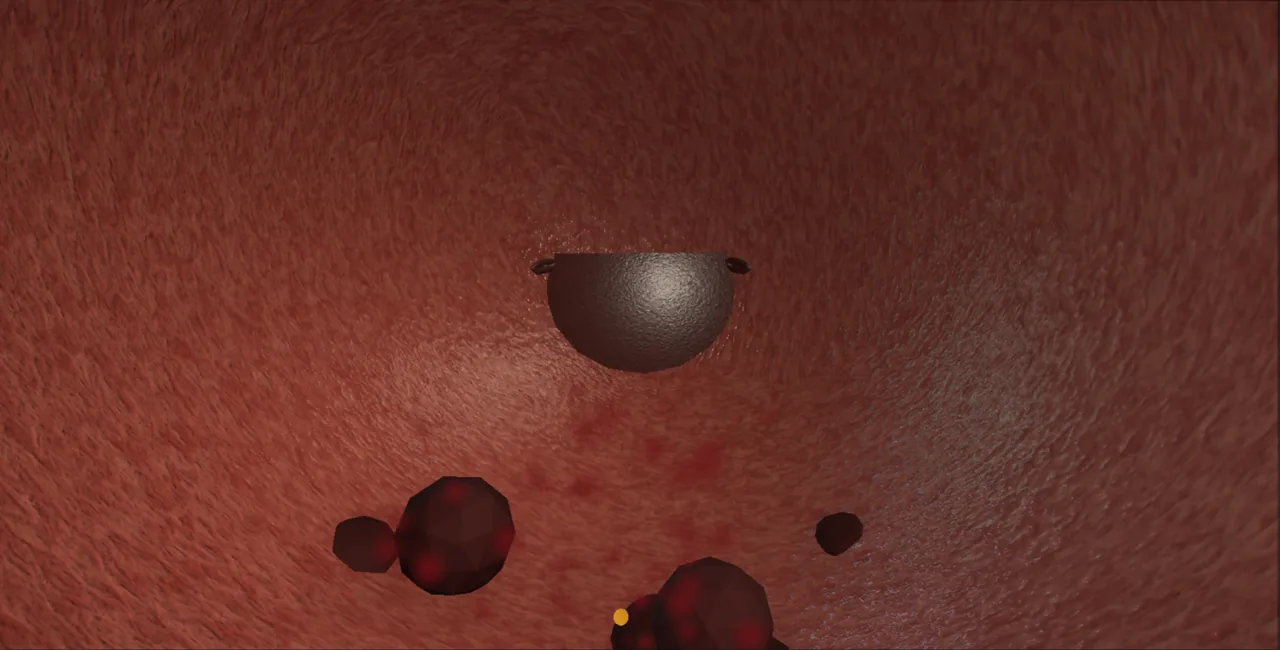 Interactive 3D Interactive clot evacuation and haemostasis Open the 3D animation
Teaching catalogue only. This coverage record is not a patient pathway or operative instruction.
Typical place in practice
Clot retention, ongoing lower-tract haemorrhage or inability to maintain catheter drainage despite appropriate bedside measures.
Alternatives and neighbouring procedures
Large-bore catheter irrigation for stable manageable bleeding; interventional radiology or open surgery when endoscopic control is impossible or inappropriate.
Same procedure family, explicit technique branches
These are variations of this canonical operation. Complication modules below identify whether they apply to all branches or only to named approaches.
Cystoscopic clot evacuation
Removes clot to restore drainage and allow bladder inspection.
Endoscopic fulguration or resection
Controls a visible mucosal, tumour-bed, prostate or bladder-neck bleeding point.
Open clot evacuation
A rescue pathway for clot burden or anatomy not manageable endoscopically.
High-level sequence
Coverage outline only; not a step-by-step technical guide.
- Resuscitate, correct reversible bleeding factors and ensure drainage
- Enter the bladder carefully despite impaired vision
- Evacuate clot without overdistension
- Inspect systematically and control identifiable bleeding
- Leave dependable drainage and investigate the bleeding cause
Every failure mode is its own module.
Timing and variation coverage are recorded for each module.
Bladder perforation or extravasation
Poor visibility, overdistension and forceful evacuation increase the risk of bladder-wall injury.
Applies to: All variantsOngoing or recurrent haemorrhage
Failure to identify the source or an incompletely treated cause can lead to renewed retention and transfusion needs.
Applies to: All variantsFluid absorption or systemic disturbance
Prolonged irrigation through injured or vascular surfaces can create systemic fluid consequences.
Applies to: All variantsUrinary infection or sepsis
Stagnant clot, instrumentation and prolonged drainage increase infectious risk.
Applies to: All variantsUreteric-orifice or sphincter injury
Haemostasis near the trigone or outlet can damage drainage or continence structures.
Applies to: Endoscopic fulguration or resectionOpen-wound or bowel complication
Cystotomy adds abdominal-wound, bowel and bladder-closure risks.
Applies to: Open clot evacuationSources for this module
Renal, ureteric, bladder, urethral and genital trauma and reconstruction.
Accessed 2026-08-03 · opens source British Association of Urological Surgeons Patient information leaflets by procedureUK patient-facing procedure, alternatives, recovery and complication framing.
Accessed 2026-08-03 · opens source