
Paediatric primary obstructed megaureter surgery
Observation-to-reconstruction hub for primary obstructed megaureter, including temporary diversion in small or acutely compromised infants.
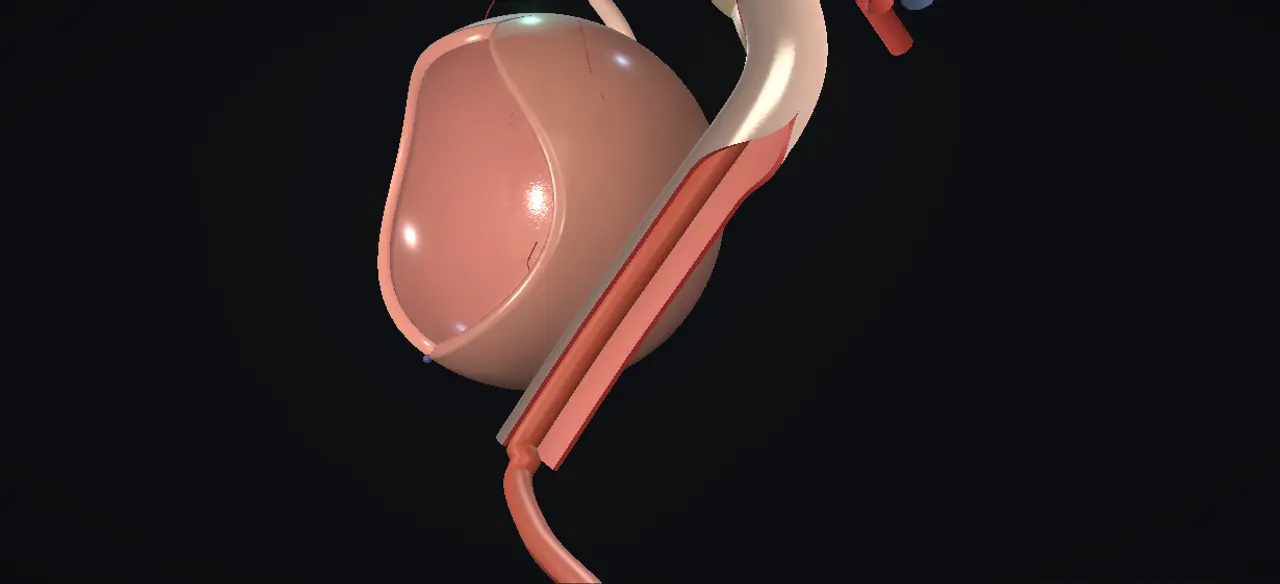 Interactive 3D Interactive megaureter repair Open the 3D animation
Teaching catalogue only. This coverage record is not a patient pathway or operative instruction.
Typical place in practice
Progressive functional concern, recurrent infection, symptoms or significant obstruction after serial assessment.
Alternatives and neighbouring procedures
Structured observation is appropriate for many stable cases; temporary internal drainage may bridge selected acute episodes.
Same procedure family, explicit technique branches
These are variations of this canonical operation. Complication modules below identify whether they apply to all branches or only to named approaches.
Excision and ureteric reimplantation
Removes the adynamic distal segment and creates a new antireflux tunnel.
Tapering or folding with reimplantation
Reduces a markedly dilated ureter to support drainage and tunnelling.
Temporary cutaneous ureterostomy
Provides drainage in selected infants before later definitive reconstruction.
Temporary internal stenting
Bridges obstruction in selected anatomy but requires device follow-up.
High-level sequence
Coverage outline only; not a step-by-step technical guide.
- Confirm primary obstruction and track renal function
- Select continued observation, temporary drainage or definitive repair
- Preserve ureteric blood supply during mobilisation
- Tailor and reimplant without kinking or excessive tension
- Monitor drainage, reflux, infection and renal growth
Every failure mode is its own module.
Timing and variation coverage are recorded for each module.
Recurrent obstruction or anastomotic stricture
Ischaemia, kinking, tight tapering or tunnel compression can impair drainage.
Applies to: All variantsNew or persistent reflux
The reconstructed antireflux mechanism may be insufficient or deliberately limited in a small bladder.
Applies to: All variantsUrinary leak or urinoma
A ureteric or bladder closure can leak before healing.
Applies to: All variantsUreteric devascularisation
Extensive mobilisation and tailoring can compromise segmental blood supply.
Applies to: Excision and ureteric reimplantation · Tapering or folding with reimplantationStomal stenosis, prolapse or skin breakdown
An external diversion can become difficult to drain or care for.
Applies to: Temporary cutaneous ureterostomyStent migration, blockage or retained device
A temporary stent needs reliable surveillance and removal.
Applies to: Temporary internal stentingUrinary infection
Residual stasis and drainage devices can promote infection.
Applies to: All variants