
Prostatic drug-coated balloon dilation
Transurethral double-lobe balloon dilation that divides the anterior commissure by pressure, followed by a paclitaxel-coated balloon held against the split surface to limit refusion.
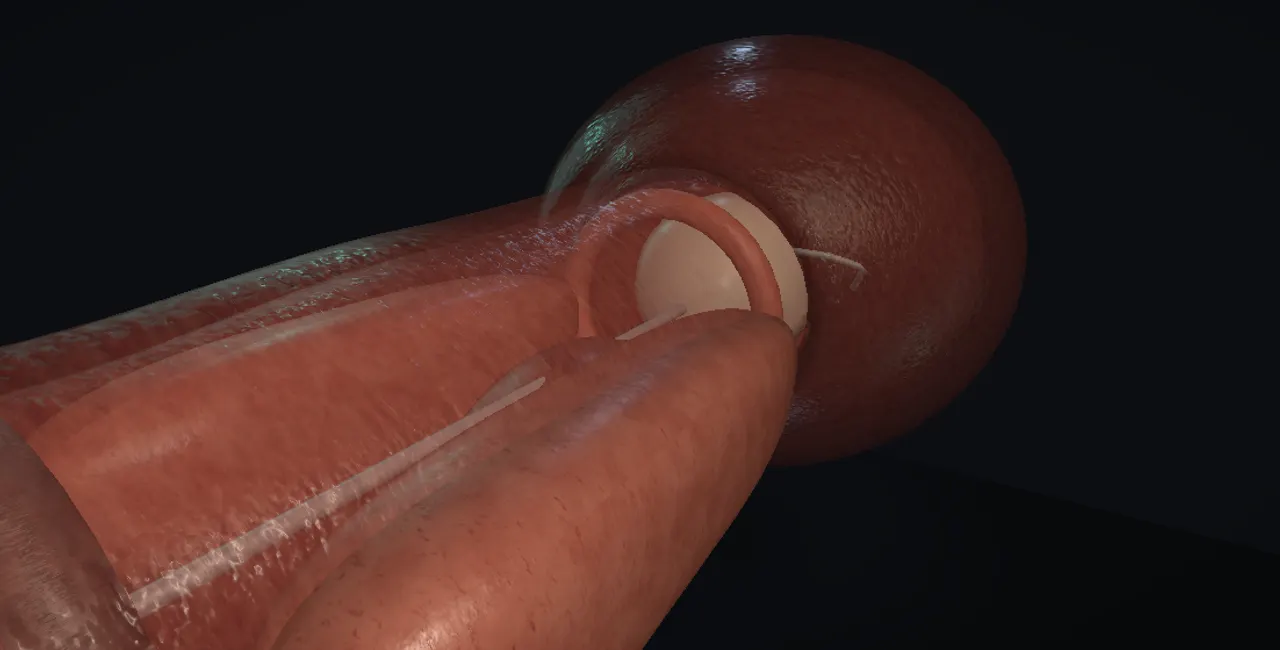 Interactive 3D Interactive drug-coated balloon dilation Open the 3D animation
Teaching catalogue only. This coverage record is not a patient pathway or operative instruction.
Typical place in practice
Selected benign prostatic obstruction with lateral-lobe anatomy, where a single procedure with preserved ejaculation is preferred to resection or to a staged temporary device.
Alternatives and neighbouring procedures
Medication, prostatic urethral lift, water-vapour therapy, temporary nitinol implant, TURP, enucleation, vaporisation or catheter strategies.
Same procedure family, explicit technique branches
These are variations of this canonical operation. Complication modules below identify whether they apply to all branches or only to named approaches.
Standard drug-coated balloon dilation
A pre-dilation balloon creates the anterior commissurotomy and a coated balloon delivers the drug to the split surface.
Dilation with planned catheter pathway
Temporary drainage is incorporated because the split surface bleeds and swells before it settles.
High-level sequence
Coverage outline only; not a step-by-step technical guide.
- Confirm lateral-lobe anatomy and measure bladder neck to verumontanum
- Pass a guidewire and seat the balloon against the bladder neck
- Dilate until the anterior commissure divides
- Exchange for the coated balloon and hold the inflation for the specified interval
- Inspect the channel, leave drainage and document both balloon sizes
The operation, step by step
A step that touches one of this module's danger zones is marked and cross-linked below.
- SetupGeneral or spinal anaesthesia, lithotomy position, antibiotic prophylaxis, and both the pre-dilation catheter and the drug-coated balloon available in the sizes the measurement may call for.
- AccessPass the cystoscope under vision, confirm lateral-lobe obstruction and measure the prostatic urethra from bladder neck to verumontanum.
- Exclude an obstructing median lobe and a urethral stricture that would prevent safe passage.
- Select the balloon from the sizing guide using the measured bladder-neck-to-verumontanum length.
- Pass a guidewire into the bladder and run every subsequent device over it.
- Inflate the distal lobe inside the bladder so the balloon is anchored before any working pressure is applied.
- Withdraw until the reinforced neck locks against the bladder neck and confirm the seat endoscopically.
- Inflate the working lobe per the instructions for use until the anterior commissure divides.
- Deflate and exchange for the drug-coated balloon over the same wire, seated in the same position.
- Hold the coated inflation for the specified interval so the drug transfers into the split surface.
- Deflate, remove the balloon and wire, and inspect the channel from bladder neck to verumontanum.
- Leave a catheter and record both balloon sizes, both inflations and the split that was seen.
- ClosureNo closure: catheter drainage only.
- AftercareCatheter for two to three days, warn that haematuria is expected from an uncoagulated surface, trial without catheter with a low threshold to recatheterise, and review with a symptom score and a flow study at three months.
Every failure mode is its own module.
Timing and variation coverage are recorded for each module.
Haematuria and clot retention
The commissurotomy leaves a raw surface that has not been coagulated, so bleeding and clot are the expected early problems.
Applies to: Standard drug-coated balloon dilation · Dilation with planned catheter pathwayAcute urinary retention
Oedema of the split surface can obstruct at the trial without catheter.
Applies to: Standard drug-coated balloon dilation · Dilation with planned catheter pathwayOver-dilation with extravasation
A balloon oversized for the gland or seated wrongly can tear beyond the commissure into periprostatic tissue.
Applies to: Standard drug-coated balloon dilationSphincteric dilation and continence risk
A working lobe seated distal to the verumontanum applies pressure across the membranous urethra.
Applies to: Standard drug-coated balloon dilationUrinary infection
Instrumentation, a raw surface and short-term catheterisation contribute to infection risk.
Applies to: Standard drug-coated balloon dilation · Dilation with planned catheter pathwaySexual-function change
The technique aims to preserve ejaculation, but ejaculatory or erectile change remains possible.
Applies to: Standard drug-coated balloon dilationPersistent obstruction or retreatment
Refusion of the commissure or unsuitable anatomy can leave symptoms and require another intervention.
Applies to: Standard drug-coated balloon dilation · Dilation with planned catheter pathwaySources for this module
Contemporary outlet procedures, selection, variants and functional trade-offs.
Accessed 2026-08-03 · opens source European Association of Urology EAU Guidelines on Urological InfectionsInfection prevention, recognition and procedure-associated infection context.
Accessed 2026-08-03 · opens source British Association of Urological Surgeons Patient information leaflets by procedureUK patient-facing procedure, alternatives, recovery and complication framing.
Accessed 2026-08-03 · opens source