
Temporarily implanted nitinol device
Cystoscopic placement of a temporary nitinol device in the prostatic urethra, which remodels the outlet by sustained radial pressure and is removed at a second visit after five to seven days.
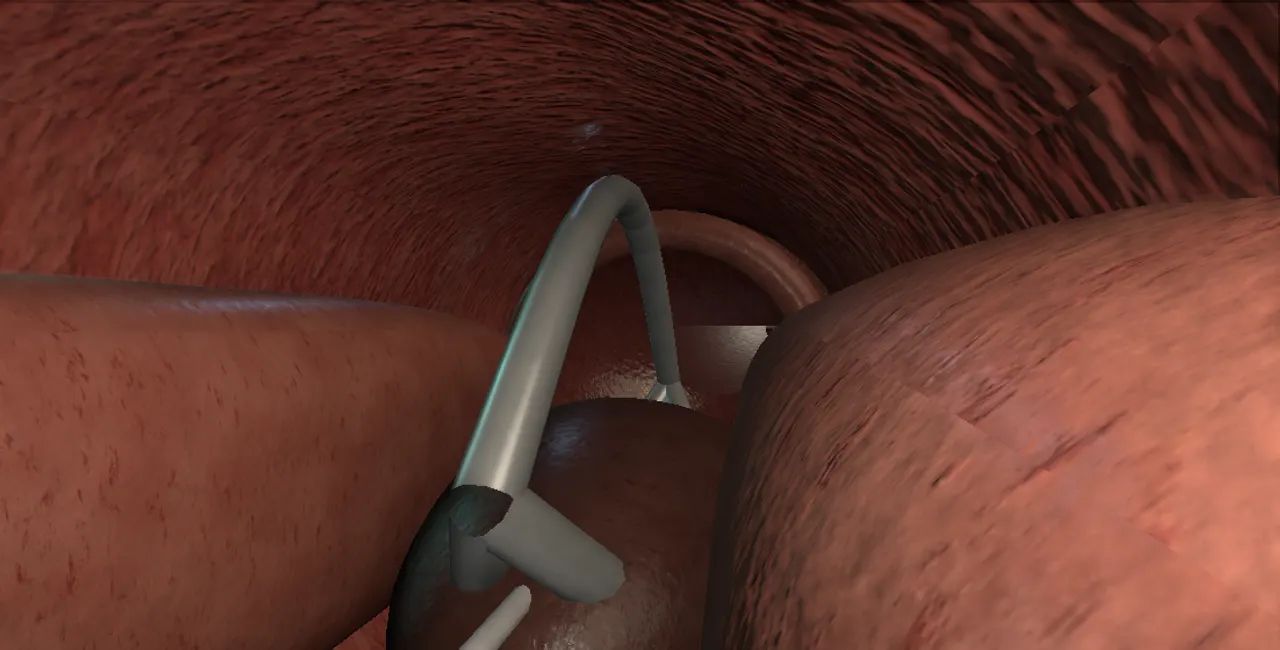 Interactive 3D Interactive temporary nitinol implant Open the 3D animation
Teaching catalogue only. This coverage record is not a patient pathway or operative instruction.
Typical place in practice
Selected benign prostatic obstruction with lateral-lobe anatomy and no obstructing median lobe, where preservation priorities and avoidance of a permanent implant fit a temporary device.
Alternatives and neighbouring procedures
Medication, prostatic urethral lift, water-vapour therapy, drug-coated balloon, TURP, enucleation, vaporisation or catheter strategies.
Same procedure family, explicit technique branches
These are variations of this canonical operation. Complication modules below identify whether they apply to all branches or only to named approaches.
Standard temporary implant
The device is deployed, seated proximal to the verumontanum and removed at five to seven days.
Early removal for intolerance
The device is removed before the planned day for pain, retention or infection.
Retrieval of a migrated device
A device that has moved into the bladder is retrieved under vision rather than by traction.
High-level sequence
Coverage outline only; not a step-by-step technical guide.
- Confirm lateral-lobe anatomy and exclude an obstructing median lobe
- Inspect bladder neck, verumontanum and sphincter before deployment
- Deploy in the bladder and withdraw into the prostatic urethra
- Orientate the anchoring leaflet and confirm the device sits proximal to the verumontanum
- Remove at five to seven days and account for the device in full
The operation, step by step
A step that touches one of this module's danger zones is marked and cross-linked below.
- SetupLocal anaesthesia with gel and an optional block or light sedation, lithotomy position, antibiotic prophylaxis, and the device on its delivery system with a cystoscope prepared.
- AccessPass the cystoscope under vision and survey the outlet: lateral lobes, bladder neck, verumontanum and the length between them.
- Confirm lateral-lobe obstruction and exclude an obstructing median lobe before anything is opened.
- Identify the verumontanum as the distal limit and the bladder neck as the proximal target.
- Advance the folded device into the bladder and open it under direct vision, clear of the trigone and both orifices.
- Draw the opened device back through the bladder neck so the struts sit along the prostatic urethra at twelve, five and seven.
- Turn the anchoring leaflet to six so it seats under the bladder neck and cranial to the verumontanum.
- Confirm the whole device lies proximal to the verumontanum with nothing crossing the sphincter.
- Check that the retrieval suture runs free down the urethra and is secured at the meatus.
- Give written instructions for the implant days and a route back for pain, fever or retention.
- At five to seven days, pass a retrieval catheter over the suture and withdraw the device under gel alone.
- Inspect the retrieved device against what was implanted and confirm it is complete before he leaves.
- ClosureNo closure: the device is removed at the second visit and nothing is left in the urethra.
- AftercareAntibiotics and an anti-inflammatory during the implant days, a documented void after removal, and review with a symptom score and a flow study at three months.
Every failure mode is its own module.
Timing and variation coverage are recorded for each module.
Acute urinary retention
Swelling and device-related irritation can prevent voiding while the device is in place or after removal.
Applies to: Standard temporary implant · Early removal for intoleranceDysuria, urgency and pelvic pain
Sustained pressure and ischaemic tissue produce bothersome symptoms for the days the device remains in place.
Applies to: Standard temporary implant · Early removal for intoleranceDevice migration
Incorrect leaflet orientation or seating allows the device to move into the bladder or too far distally.
Applies to: Standard temporary implant · Retrieval of a migrated deviceSphincteric malposition and continence risk
A device seated distal to the verumontanum places a strut across the membranous urethra and the external sphincter.
Applies to: Standard temporary implantUrinary infection
An indwelling device with ischaemic tissue for several days contributes to infection risk.
Applies to: Standard temporary implant · Early removal for intolerance · Retrieval of a migrated deviceHaematuria
Separation of the ischaemic lines causes bleeding during the implant period and after removal.
Applies to: Standard temporary implant · Early removal for intolerancePersistent obstruction or retreatment
The remodelling effect is smaller than resection and a proportion of patients require a further procedure.
Applies to: Standard temporary implantSources for this module
Contemporary outlet procedures, selection, variants and functional trade-offs.
Accessed 2026-08-03 · opens source European Association of Urology EAU Guidelines on Urological InfectionsInfection prevention, recognition and procedure-associated infection context.
Accessed 2026-08-03 · opens source British Association of Urological Surgeons Patient information leaflets by procedureUK patient-facing procedure, alternatives, recovery and complication framing.
Accessed 2026-08-03 · opens source