
Transurethral incision of the prostate and bladder-neck incision
Endoscopic incision of selected bladder-outlet tissue without formal adenoma resection, with the target and depth determined by the underlying anatomy.
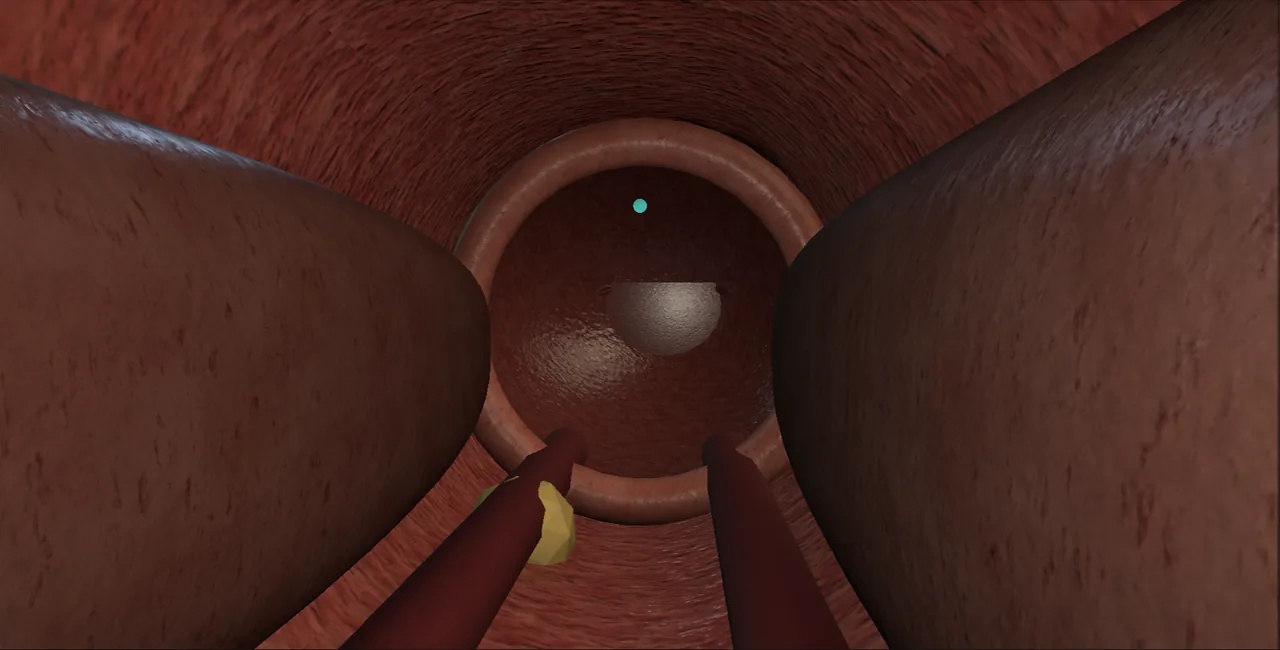 Interactive 3D Interactive bladder neck incision Open the 3D animation
Teaching catalogue only. This coverage record is not a patient pathway or operative instruction.
Typical place in practice
Selected small benign prostates, high bladder necks or bladder-neck contractures where incision is preferable to tissue resection.
Alternatives and neighbouring procedures
Observation, medication, catheter strategies, resection, enucleation or reconstruction according to cause and severity.
Same procedure family, explicit technique branches
These are variations of this canonical operation. Complication modules below identify whether they apply to all branches or only to named approaches.
Single-incision TUIP
One controlled incision opens a selected obstructing bladder neck or small prostate.
Bilateral TUIP
Paired incisions widen the outlet while avoiding circumferential resection.
Bladder-neck incision for contracture
A postoperative bladder-neck scar is incised with particular attention to adjacent ureteric orifices and continence structures.
Laser bladder-neck incision
Laser energy creates the planned incision with a different thermal and haemostatic profile.
High-level sequence
Coverage outline only; not a step-by-step technical guide.
- Confirm the anatomical cause and suitability for incision
- Inspect ureteric orifices, sphincter and bladder neck
- Mark and deepen the planned incision under continuous vision
- Stop at the intended anatomical endpoint and secure haemostasis
- Assess drainage and document incision site, depth and functional counselling
The operation, step by step
A step that touches one of this module's danger zones is marked and cross-linked below.
- SetupRegional or general anaesthesia, lithotomy position, perineal prep and draping, with the operating cystoscope or resectoscope and the chosen cutting energy checked.
- AccessPass the instrument under vision, note the urethral calibre, and survey the bladder in one continuous inspection.
- Identify both ureteric orifices and their distance from the bladder neck, because the incision starts at that level. danger zone: Ureteric orifices
- Centre the verumontanum and confirm the external urethral sphincter just distal to it as the boundary the incision never reaches. danger zone: External urethral sphincter
- Make one incision only, at 7 o’clock, as a straight line.
- Start the incision just distal to the ureteric orifice at the bladder neck and cut through the neck towards, but stopping short of, the verumontanum.
- Deepen along the same line until the bladder-neck fibres part, judging depth against the capsule, and stop before opening the periprostatic venous sinuses. danger zone: Periprostatic venous sinuses
- Confirm the neck has opened: it springs open, the instrument passes without recoil and the cut edges separate.
- Keep the depth even along the line from the neck to short of the verumontanum; no second incision.
- Control bleeding with short point coagulation, keeping thermal spread away from the ureteric orifices and the sphincter. danger zone: Ureteric orifices
- For a postoperative contracture, identify the orifices first and incise the scar radially away from them.
- ClosureLeave a two-way catheter that clears the incision site; no drains.
- AftercareRemove the catheter within 24 to 48 hours and trial void, warning that healing tissue can re-narrow and that opening the neck trades away antegrade ejaculation.
Operative notes
Concise operative notes covering the key steps, landmarks and watch points, in the order you encounter them.
Bladder neck incision (TUIP)
What it does: 1 or 2 cuts to open a tight, small prostate.
- Collings knife. (A right-angle cutting electrode.)
- 1 cut at 7 o'clock. Or 2 cuts, at 5 and 7.
- Start just past the ureteric orifice.
- Cut through the neck. Stop just before the veru.
- Cut deep enough to see fat in the base.
- Coagulate with the knife, or use a roly-ball.
- Watch: Best for prostates under 30 mL. No median lobe.
- Watch: Retrograde ejaculation in roughly 20% (about 65% after TURP). Consent for it.
- Watch: Less bleeding than TURP. More re-dos.
From the UroRef Operative Quick Guide. Open the note page →
Every failure mode is its own module.
Timing and variation coverage are recorded for each module.
Bleeding or clot retention
An incision may open venous sinuses or scar vessels and postoperative clot can obstruct drainage.
Applies to: Single-incision TUIP · Bilateral TUIP · Bladder-neck incision for contracture · Laser bladder-neck incisionCapsular or extravesical perforation
An incision carried beyond the intended depth can breach the prostate, bladder neck or adjacent tissue.
Applies to: Single-incision TUIP · Bilateral TUIP · Bladder-neck incision for contracture · Laser bladder-neck incisionUreteric-orifice injury
Distorted postoperative anatomy can bring an orifice close to a lateral or scar-directed incision.
Applies to: Bladder-neck incision for contractureUrinary infection
Instrumentation, catheterisation and residual obstruction can contribute to postoperative infection.
Applies to: Single-incision TUIP · Bilateral TUIP · Bladder-neck incision for contracture · Laser bladder-neck incisionRetrograde ejaculation or ejaculatory change
Opening the bladder neck can alter antegrade ejaculation; risk varies with incision pattern and anatomy.
Applies to: Single-incision TUIP · Bilateral TUIP · Bladder-neck incision for contracture · Laser bladder-neck incisionStress urinary incontinence
Incising a contracture may unmask weak sphincter function or injure continence tissue.
Applies to: Bladder-neck incision for contractureRecurrent obstruction or contracture
Incomplete opening, progressive adenoma or scar reformation may lead to recurrent symptoms and further intervention.
Applies to: Single-incision TUIP · Bilateral TUIP · Bladder-neck incision for contracture · Laser bladder-neck incisionSources for this module
Contemporary outlet procedures, selection, variants and functional trade-offs.
Accessed 2026-08-03 · opens source European Association of Urology EAU Guidelines on Urological InfectionsInfection prevention, recognition and procedure-associated infection context.
Accessed 2026-08-03 · opens source British Association of Urological Surgeons Patient information leaflets by procedureUK patient-facing procedure, alternatives, recovery and complication framing.
Accessed 2026-08-03 · opens source