
Transurethral resection of the prostate
Endoscopic resection of obstructing prostatic tissue to create a channel from bladder neck to verumontanum while preserving the sphincter and capsule.
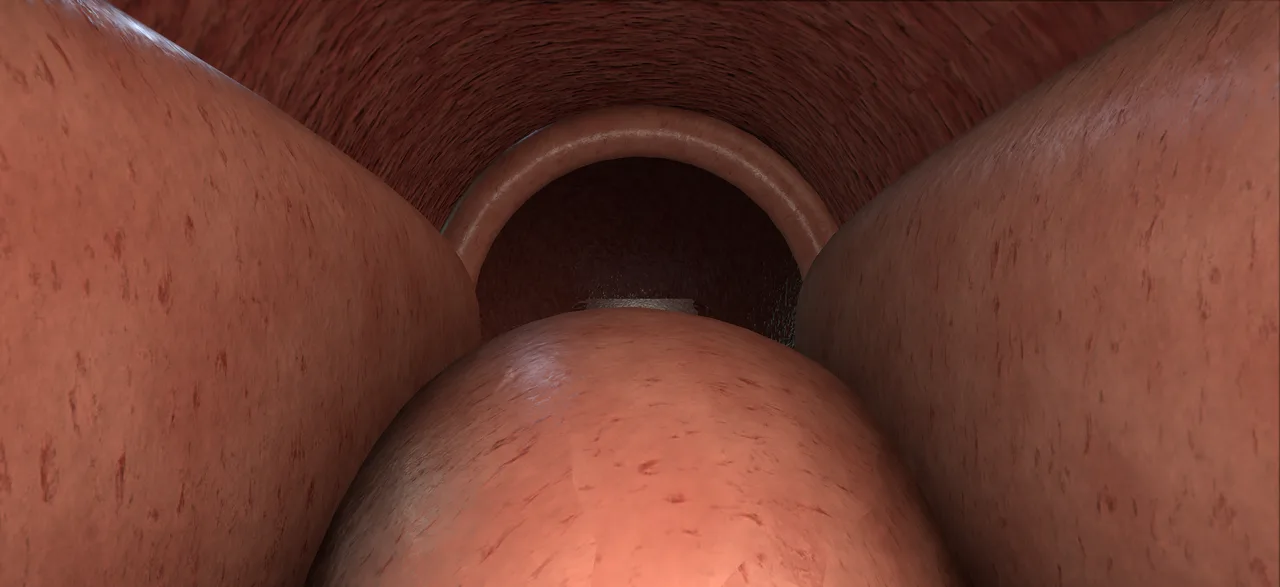 Interactive 3D Interactive resection atlas, beat by beat Open the 3D animation
Teaching catalogue only. This coverage record is not a patient pathway or operative instruction.
Typical place in practice
Surgical treatment of benign prostatic obstruction when resection is appropriate for gland, anatomy, comorbidity and patient priorities.
Alternatives and neighbouring procedures
Medication, catheter strategies, TUIP, enucleation, vaporisation, simple prostatectomy or minimally invasive outlet procedures.
Same procedure family, explicit technique branches
These are variations of this canonical operation. Complication modules below identify whether they apply to all branches or only to named approaches.
Monopolar TURP
Tissue is resected with monopolar energy using a compatible non-electrolyte irrigation system.
Bipolar TURP
Bipolar energy permits saline irrigation and has a different fluid and electrical profile.
Standard complete TURP
Obstructing adenoma is resected methodically to the planned capsule and apical endpoint.
Limited channel TURP
A deliberately limited channel addresses a defined drainage goal rather than full adenoma clearance.
High-level sequence
Coverage outline only; not a step-by-step technical guide.
- Inspect urethra, bladder, ureteric orifices and key prostatic landmarks
- Resect in a planned sequence while controlling depth and irrigation
- Protect the apex, verumontanum and external sphincter
- Evacuate chips and secure haemostasis with low-pressure inspection
- Establish catheter drainage and reconcile tissue, fluid and operative findings
The operation, step by step
A step that touches one of this module's danger zones is marked and cross-linked below.
- SetupRegional or general anaesthesia, lithotomy position, perineal prep and draping, continuous-flow resectoscope with the irrigant bag at protocol height; monopolar loops need a non-electrolyte irrigant, bipolar runs on 0.9% normal saline.
- AccessPass the sheath under vision through the urethra, unlock the camera before any loop rotation, and complete one slow circumferential cystoscopy before cutting.
- Survey the bladder neck and ureteric orifices: fix exactly two orifices and their relationship to the bladder neck and median lobe before any resection. danger zone: Bladder neck and ureteric orifices
- Withdraw under vision and centre the verumontanum at 6 o’clock, fixing the veru and the external sphincter just distal to it as the distal limit the view never reverses past.
- Start each channel at the bladder neck: take the proximal median lobe in connected withdrawal passes at the set energy (film reference bipolar cut 200 W in 0.9% normal saline; confirm generator-specific settings and local protocol), reshaping the same tissue towards the capsule.
- Keep the bladder-neck rim intact rather than chasing chips beneath it, because an undermined trigone or bladder neck bleeds late and hides the orifices. danger zone: Undermined trigone or bladder neck
- Work the median lobe distally in cumulative passes, always stopping proximal to the veru.
- Release the patient-right lobe: seat the curved tip of the loop at the 11 o’clock entry, hold, then come down slowly through 10 to 9 o’clock until the white circular fibres of the surgical capsule and venous sinuses declare the depth limit. danger zone: Surgical capsule and venous sinuses
- Return to the fixed forward station just proximal to the veru with the loop closed and let the released lobe drop into the median-lobe defect without reversing the view.
- Hook the fallen right edge at 8 o’clock from the distal station and remove the lobe in three deep, long chunks pulled towards the camera, staying on the adenoma side of the capsule.
- Mirror the sequence on the patient-left side: seat at 1 o’clock, descend slowly to 3, let the lobe drop, hook it at 4 o’clock and clear it in long chunks.
- Hold the distal safety limit before the apex: turn the loop upside down and take short 12 o’clock cuts pulled towards the camera, sparing the apical tissue beside the external sphincter. danger zone: Apical tissue beside the external sphincter
- Evacuate chips with the Ellik from a held bladder angle over three controlled cycles, then reassess the cavity and selectively re-resect only remnant obstructing tissue.
- Secure haemostasis with the loop or button electrode (film reference coag 120 W), working from the bladder neck and median-lobe bed back to the veru, then treating lateral-bed bleeders selectively.
- Reconcile and document: irrigant in against fluid out, specimen to histology, a channel from bladder neck to veru, and any deviation from the plan.
- ClosureNo sutured closure: place a three-way catheter, apply gentle traction per protocol, and record the fluid deficit and specimen weight.
- AftercareRun irrigation until the efflux clears, release traction the same day, trial void within 24 to 48 hours, and counsel on transient storage symptoms and ejaculatory change before discharge.
Operative notes
Concise operative notes covering the key steps, landmarks and watch points, in the order you encounter them.
TURP - core resection technique
What it does: shave the prostate through the penis, chip by chip.
- Tight urethra for the 24/26Ch sheath? Dilate with Clutton sounds. Or cut with Otis to 30.
- Cut canoe-shaped chips. Bring the loop fully out, or cut on the sheath edge.
- Never pull the loop deep inside the sheath. The spark can crack the lens.
- Rhythm: lift the handpiece, sink the loop, stroke towards yourself.
- Make each stroke count. Chip as deep as the loop.
- ALWAYS know where the veru is. The veru is the distal limit. Neck is the top limit.
- Arterial bleeder: coagulate on sight, at its point, not the bed around it. Venous sinus: do not chase it. Coagulating it opens it.
- Venous ooze: slow the water. Fast flow hides veins.
- Chips out with the Ellik: bulb full, no air. Squeeze and release until the return is clear. Look behind the neck for the last chip.
- Bubbles: stop flow, drain, tap the scope.
- Legs at 45 degrees max to the table.
- Watch: Spinal anaesthetic is common. An awake patient sees flashing lights early. That can be the first sign of TUR syndrome. (Fluid getting into the veins. Sodium drops.)
- 2026 update: Bipolar TURP on saline is now the UK default. No glycine. No classic TUR syndrome.
- 2026 update: Big gland over 80-100 mL? EAU 2026 backs laser enucleation (HoLEP or ThuLEP). Size does not limit it.
- 2026 update: Rezum, Aquablation, UroLift, PAE also in the pathway.
From the UroRef Operative Quick Guide. Open the note page →
Every failure mode is its own module.
Timing and variation coverage are recorded for each module.
Bleeding and clot retention
Open venous sinuses or arterial points may bleed during or after resection and obstruct catheter drainage.
Applies to: Monopolar TURP · Bipolar TURP · Standard complete TURP · Limited channel TURPCapsular perforation or extravasation
Resection beyond the capsule can open venous sinuses, permit irrigant extravasation and distort the operative plane.
Applies to: Monopolar TURP · Bipolar TURP · Standard complete TURP · Limited channel TURPIrrigation-fluid absorption syndrome
Absorption of non-electrolyte irrigation through open sinuses can cause acute fluid and electrolyte disturbance.
Applies to: Monopolar TURPVolume overload or physiological disturbance
Saline irrigation avoids classic hypotonic fluid effects but substantial absorption can still contribute to cardiopulmonary or metabolic instability.
Applies to: Bipolar TURP · Standard complete TURP · Limited channel TURPUreteric-orifice, bladder-neck or sphincter injury
Loss of landmarks, deep resection or apical over-treatment may damage drainage or continence structures.
Applies to: Monopolar TURP · Bipolar TURP · Standard complete TURP · Limited channel TURPUrinary infection or sepsis
Instrumentation, bacteriuria, tissue trauma and catheterisation create postoperative infection risk.
Applies to: Monopolar TURP · Bipolar TURP · Standard complete TURP · Limited channel TURPRetrograde ejaculation and erectile or orgasmic change
Bladder-neck and prostatic tissue removal commonly changes ejaculation and can affect other aspects of sexual function.
Applies to: Monopolar TURP · Bipolar TURP · Standard complete TURP · Limited channel TURPUrinary incontinence or persistent storage symptoms
Urgency may persist after relief of obstruction, while sphincter injury or unmasked weakness can produce stress leakage.
Applies to: Monopolar TURP · Bipolar TURP · Standard complete TURP · Limited channel TURPUrethral stricture, bladder-neck contracture or regrowth
Healing or residual/progressive adenoma can cause recurrent obstruction and need for further treatment.
Applies to: Monopolar TURP · Bipolar TURP · Standard complete TURP · Limited channel TURPSources for this module
Contemporary outlet procedures, selection, variants and functional trade-offs.
Accessed 2026-08-03 · opens source European Association of Urology EAU Guidelines on Urological InfectionsInfection prevention, recognition and procedure-associated infection context.
Accessed 2026-08-03 · opens source British Association of Urological Surgeons Patient information leaflets by procedureUK patient-facing procedure, alternatives, recovery and complication framing.
Accessed 2026-08-03 · opens source